The best time to visit Bali is during the shoulder months of April, May, June and September. These months fall in the dry season, so you get sunny days and low humidity, with a more relaxed feel and greater flexibility when it comes to accommodation rates. If you want the driest weather of the year and don't mind busier beaches, July and August are hard to beat.
The Short Answer: Best Month to Visit Bali
Bali sits just south of the equator, so it is warm all year, with temperatures around 26-32°C. What changes is the rain. For most travellers, the sweet spot looks like this:
-
Best overall: April to June and September. Dry, green, calmer and better value.
-
Best weather: July and August. The driest, sunniest months, while avoiding the busiest travel periods, when visitor numbers are higher and accommodation rates tend to increase.
-
Best budget: November to March (excluding Christmas and New Year). Lower villa rates and fewer tourists, in exchange for afternoon downpours.
In short, there is no truly bad month to visit Bali. The right time depends on what you want to do and where you plan to stay.
Dry Season vs Rainy Season in Bali
Bali has two seasons rather than four, and each comes with its own advantages and considerations:
Dry season (April to October)
The dry season brings blue skies, lower humidity and calm evenings. It is ideal for beach days, island hopping, sunrise hikes and outdoor dining. The trade-off is demand in July, August and early September coincide with European and Australian school holidays, so flights, villas and popular spots fill up fast. Book early if you plan to travel in these months. For packing and preparation, see our Bali summer travel guide.
Rainy season (November to March)
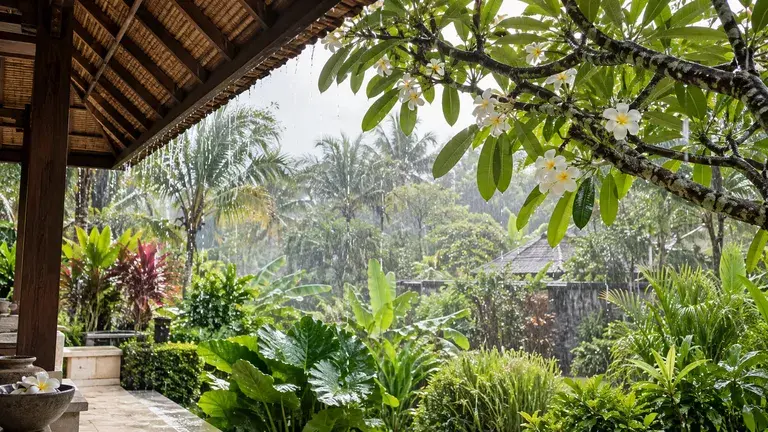
The rainy season is hotter and more humid, with the heaviest rain from December to February. Rain usually comes as short, heavy afternoon or evening storms, so mornings are often clear. The island is at its greenest, rice terraces are full and lush, and villa prices drop outside the holiday weeks. Heavy rain can occasionally affect road conditions, bring rougher seas and leave some debris along west-coast beaches. Our guide to the Bali rainy season covers what to expect and how to enjoy a villa stay.
Bali Month by Month
| Month | Season | Weather | Crowds | Good to know |
| January | Rainy | Wettest month, humid | Low | Great villa deals after New Year |
| February | Rainy | Heavy showers | Low | Quietest time on the island |
| March | Rainy, easing | Showers tapering off | Low | Nyepi (Day of Silence) usually falls this month |
| April | Dry begins | Sunny, green landscapes | Moderate | Excellent value, lush rice fields |
| May | Dry | Sunny, low humidity | Moderate | One of the best months overall |
| June | Dry | Sunny, cooler nights | Moderate to high | Bali Arts Festival starts |
| July | Dry | Driest and sunniest | Very high | School holidays, book early |
| August | Dry | Dry, breezy | Very high | Peak season prices |
| September | Dry | Sunny, warm seas | Moderate | Crowds thin, weather still great |
| October | Dry, ending | Warm, first showers | Moderate | Ubud Writers & Readers Festival |
| November | Rainy begins | Humid, more rain | Low | Good shoulder-season rates |
| December | Rainy | Wet and hot | High late in month | Christmas and New Year |
Check villa availability for your dates →
Best Time to Visit Bali by Activity
Surfing
The dry season (April to October) is prime time for the famous west-coast breaks such as Uluwatu, Padang Padang and Canggu Beach. Southeast trade winds blow offshore there and the Indian Ocean swells are consistent. In the rainy season, the winds switch, and the east coast around Keramas and Sanur takes over. Beginners will find gentler conditions on Kuta and Canggu's beach breaks in the shoulder months.
Diving and Snorkelling
You can dive in Bali all year, but visibility is best from April to November. July to October is the season for spotting the giant mola mola (ocean sunfish) around Nusa Penida and Nusa Lembongan. Calm spots like Tulamben's USAT Liberty wreck and Amed remain diveable in most months.
Hiking
Plan sunrise treks up Mount Batur or Mount Agung between April and October. Trails are dry and safer, and clear skies give you the best views over the caldera and across to Lombok. In the rainy season, paths turn muddy and summits are often lost in clouds.
Festivals and Culture
Balinese ceremonies happen year-round, so there is always something to see. Highlights include:
-
Nyepi (usually March): The Balinese New Year. The night before brings giant ogoh-ogoh parades; on the day itself, the whole island, including the airport, shuts down for 24 hours.
-
Galungan and Kuningan: Held every 210 days, when villages are decorated with tall bamboo penjor poles.
-
Bali Arts Festival (June to July): A month of dance, music and crafts in Denpasar.
-
Ubud Writers & Readers Festival (October): One of Southeast Asia's leading literary events.
Best Time to Visit Bali by Area
Canggu
Canggu is one of Bali's best-known surf and cafe destinations. It is at its best from April to October, when the beaches are clean, sunsets are spectacular and the surf is reliable. During the rainy season, heavier rainfall can affect sea conditions and bring more natural debris onto the beaches, but the cafes, coworking spaces and beach clubs stay lively all year. See our things to do in Canggu.
Uluwatu
The Bukit Peninsula is one of the driest parts of Bali, thanks to its limestone cliffs and lower rainfall. Visit between May and September for world-class surfing, crystal-clear water at beaches like Bingin and Melasti, and the famous Kecak fire dance at Uluwatu Temple at sunset. Even in the rainy season, Uluwatu often stays sunnier than the rest of the island. Plan your days with our Uluwatu guide.
Ubud
Inland Ubud sits higher up, so it is cooler and gets more rain than the coast. The dry months of April to October are ideal for rice-terrace walks, cycling tours and waterfall visits. That said, the rainy season has its own charm; the jungle is at its most vivid, waterfalls are powerful, and the town feels calmer. Bring a light rain jacket and plan outdoor activities for the morning.
Find Your Villa in Bali
Whenever you decide to travel, where you stay shapes your whole trip. A private villa gives you space to unwind, your own pool for hot afternoons, and a comfortable base when the rain rolls in. Browse Betterplace's villas for rent in Bali, from surf-side homes in Canggu and cliff-top retreats in Uluwatu to jungle hideaways in Ubud, and book early for peak months to secure the best options.
FAQ: Best Time to Visit Bali
What is the best month to visit Bali?
May and September are often considered the best months. Both are dry and sunny, but less crowded and more affordable than July and August.
What is the worst time to visit Bali?
There is no truly bad time, but January and February bring the heaviest rain. Late December can also be challenging because of crowds and high prices.
Is it worth visiting Bali in the rainy season?
Yes. Rain usually falls in short afternoon bursts, the landscape is lush, and villa rates are lower. It suits travellers who want a quieter, better-value trip.
When is peak season in Bali?
Peak season runs from July to August, plus the Christmas and New Year periods. Expect higher prices and book villas and flights well in advance.
What should I know about visiting Bali during Nyepi?
On Nyepi, usually in March, the whole island observes 24 hours of silence. The airport closes, and guests must stay inside their accommodation, so a villa with a pool makes the day far more enjoyable.
Which area of Bali is best in the rainy season?
Uluwatu and the Bukit Peninsula tend to stay drier than the rest of the island. For surfers, the east coast around Keramas offers the best waves at this time of year.
Browse villas in Bali → | Plan your stay with Betterplace Concierge →