

Understanding Bali’s Real Estate Market in 2026
The Bali real estate market in 2026 is no longer defined by rapid post-pandemic growth. It is now shaped by data, strategy, and market maturity. For investors, developers, and villa owners, understanding the terminology behind market shifts is no longer optional. It is essential.
From “price rationalization” to “supply saturation” and “price elasticity,” the language of real estate in Bali has evolved alongside the market itself. What used to be a relatively straightforward investment landscape has become more nuanced, where performance depends on how well you understand the underlying mechanics.
This glossary-style guide breaks down the most important concepts, statistics, and trends shaping Bali’s property market in 2026. Whether you are a first-time investor or an experienced owner, this guide will help you read the market more clearly and make better decisions because of it.
Market Snapshot: Key Terms Explained
International Arrivals
International arrivals refer to the total number of foreign tourists entering Bali within a specific period. In 2025, Bali welcomed approximately 6,948,754 international visitors, representing a 9.7% increase from 2024.
This metric is critical because it directly reflects demand for short-term rental properties. More visitors generally mean more potential bookings, but in 2026, this relationship is no longer linear due to the rapid increase in supply.
Source Markets
Source markets indicate where tourists are coming from. In Bali, Australia dominates with around 35% of total visitors, followed by countries like India, China, South Korea, and the UK. Russia stands out as the fastest-growing market, with a 26% increase year-on-year.
Understanding source markets helps investors tailor property design, pricing, and marketing strategies. For example, Australian travelers may prioritize convenience and beach access, while European guests tend to stay longer and value privacy.
Domestic Tourism
Domestic tourism refers to travel activity within Indonesia. In 2025, domestic travel declined by approximately 5%, as Indonesian travelers explored alternative destinations in Java. While often overlooked, domestic demand plays a stabilizing role during low international seasons. A decline in this segment can increase reliance on foreign tourists, adding volatility to occupancy rates.
Active Listings
Active listings represent the number of rental properties currently available on platforms such as Airbnb and Booking.com. In 2025, Bali reached 45,774 active listings. This number is crucial because it reflects supply. When listings grow faster than tourist arrivals, competition intensifies, leading to pricing pressure and lower occupancy for undifferentiated properties.
Supply Concentration
Supply concentration refers to how inventory is distributed across property types. In Bali, over 85% of listings are concentrated in the 1–3 bedroom segment. This imbalance creates oversaturation in certain categories while leaving others, such as luxury villas, relatively underserved.
Demand vs Supply Dynamics
Supply Growth vs Demand Growth
2024 marked a period of market equilibrium, with both supply and demand increasing at a relatively balanced pace. This created a stable environment that allowed the market to grow sustainably without significant price volatility.
In 2025, however, the gap between supply and demand began to widen. Active Listings increased by 15.54%, surpassing the 9.7% growth in foreign arrivals. This growing “supply-side pressure” suggests the potential for a modest short-term rate correction, as operators adjust pricing strategies to maintain visibility and competitiveness in the market, contributing to the ripple effects currently being seen across the sector.
For long-term investors, this should be viewed as a positive market adjustment rather than a downturn. The current conditions reflect a temporary phase of consolidation, supporting a healthier and more sustainable market foundation over time.
Average Daily Rate (ADR)
ADR stands for Average Daily Rate, a key metric used to measure rental performance. It represents the average price per night across bookings.
In 2025, ADRs declined across all segments:
-
1-bedroom: $61 (down from $67)
-
2-bedroom: $122 (down from $140)
-
3-bedroom: $192 (down from $211)
-
4-bedroom: $292 (down from $318)
-
5-bedroom: $454 (down from $488)
ADR is a direct reflection of pricing power, and declining ADRs indicate increasing competition.
Occupancy Rate
Occupancy rate measures the percentage of time a property is booked over a given period.
In 2025:
-
1-bedroom: 55.33%
-
2-bedroom: 58.52%
-
3-bedroom: 60.67%
-
4-bedroom: 64.85%
-
5-bedroom: 51.75%
Higher occupancy does not always mean higher profitability, especially if achieved through heavy discounting.
Price Elasticity
Price elasticity measures how sensitive demand is to price changes. A high elasticity means small price increases can significantly reduce bookings.
In Bali:
-
1-bedroom elasticity: 9.38 (highly sensitive)
-
5-bedroom elasticity: 4.66 (more stable)
This explains why luxury properties tend to perform better in competitive markets.
Market Segmentation
1–3 Bedroom Segment
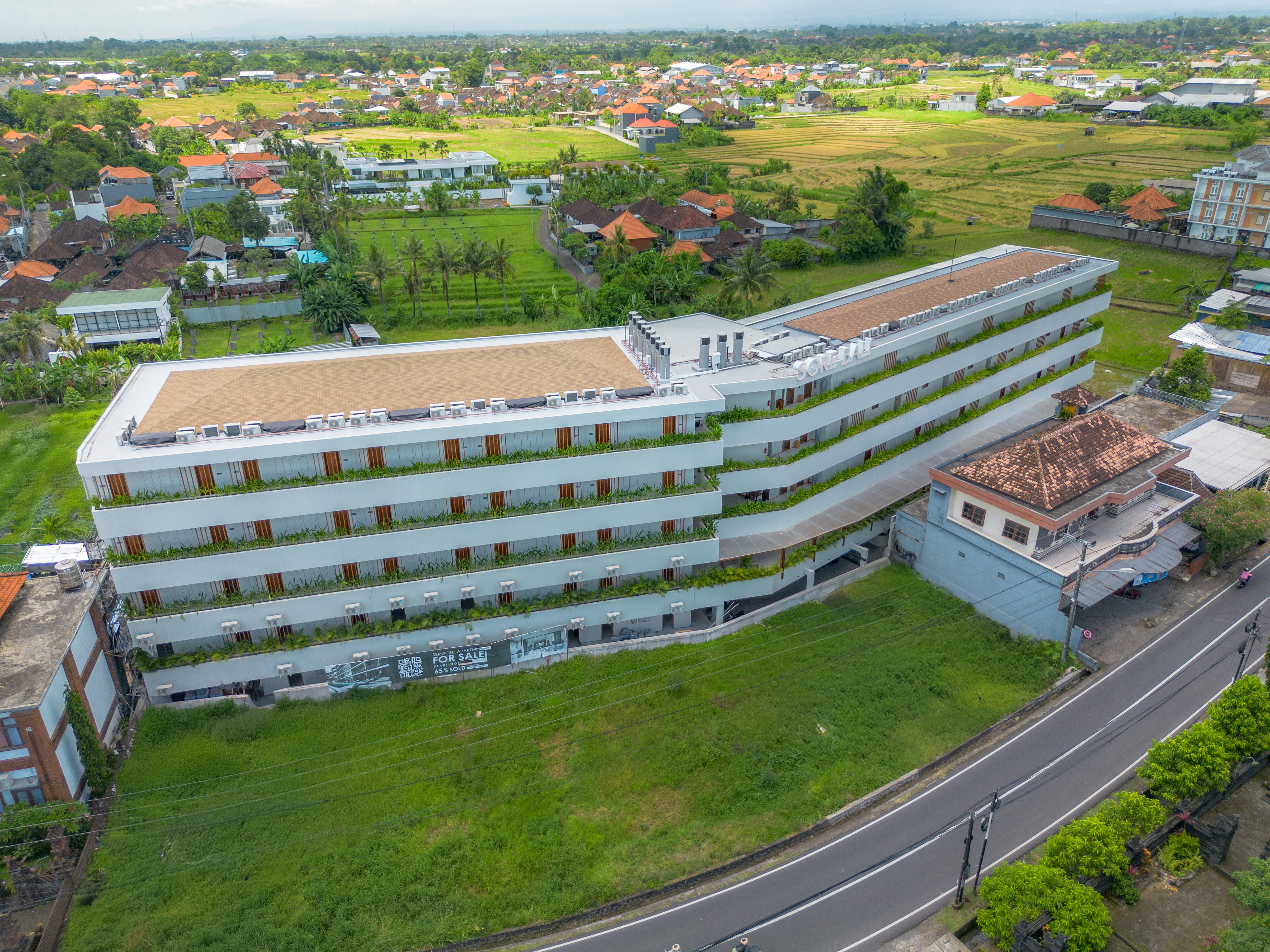
This segment dominates the market, accounting for over 85% of supply. It is highly competitive, price-sensitive, and vulnerable to oversupply. Most new developments fall into this category, particularly “commercial-boutique” projects designed to maximize unit density.
4–5+ Bedroom Segment
The luxury segment represents only about 7.5% of total listings. It is less crowded, more resilient to price fluctuations, and attracts higher-spending guests. This segment is often referred to as a “blue ocean” opportunity due to its limited competition.
Commercial-Boutique Projects
These are high-density developments built on smaller plots, typically consisting of multiple compact units. While attractive as entry-level investments, they contribute significantly to oversupply and price competition in the 1–3 bedroom category.
Infrastructure and Growth Drivers

Bali Urban Subway (MRT)
The planned MRT system is designed to improve connectivity across key areas such as Canggu and Seminyak. Infrastructure improvements like this can significantly impact property values by reducing travel time and increasing accessibility.
North Bali International Airport
This proposed airport is expected to unlock new growth areas by expanding Bali’s capacity and reducing congestion in the south. Investors targeting early-stage locations near this development may benefit from long-term capital appreciation.
Infrastructure-Led Growth
Infrastructure-led growth refers to the increase in property value driven by improvements in accessibility and logistics. In Bali, this trend is becoming increasingly important as traffic congestion and accessibility challenges affect rental performance.
Investment Trends

Data-Driven Pricing
Data-driven pricing involves adjusting rental rates based on real-time market conditions, demand patterns, and competitor analysis. In 2026, this approach is essential for maintaining both occupancy and revenue.
Dynamic Revenue Management
This refers to actively managing pricing, availability, and promotions to optimize performance. Unlike passive ownership models, dynamic management requires constant monitoring and adjustment.
Underwriting
Underwriting is the process of evaluating an investment’s financial viability, including projected income, costs, and risks. In the current market, conservative underwriting is crucial due to pricing pressure and supply growth.
Risk Factors
Oversupply Risk
Oversupply occurs when the number of properties exceeds demand. In Bali, this is most evident in the 1–3 bedroom segment. This leads to lower ADRs, reduced occupancy, and increased competition.
Pricing Risk
Pricing risk arises from declining ADRs and high price sensitivity. Properties that rely on aggressive pricing may struggle to maintain profitability.
Execution Risk
Execution risk refers to operational challenges, such as poor management, lack of pricing strategy, or inefficient marketing. In 2026, success depends heavily on professional management and data-backed decisions.
Legal and Compliance Risk
Regulatory enforcement is increasing, with stricter requirements for licenses, taxes, and zoning compliance. Failure to comply can result in penalties, operational disruptions, or even property closures.
Property Types
Villas
Villas dominate Bali’s rental market, accounting for approximately 87% of supply. They remain the preferred choice for both investors and travelers.
Apartments
Apartments are growing in popularity due to lower entry costs, but face intense competition in pricing and occupancy.
Land
Land investments are closely tied to infrastructure development. Areas near future projects may offer strong appreciation potential.
Off-Plan Projects
Off-plan investments involve purchasing properties before construction is completed. While potentially profitable, they carry risks related to delays, compliance, and market timing.
Whether you are exploring villas, apartments, land, or off-plan developments, choosing the right investment strategy starts with understanding Bali’s evolving market dynamics. Connect with experienced professionals to identify opportunities aligned with your goals, risk profile, and long-term vision.
Location-Based Trends

Canggu and Seminyak
These areas remain high-demand but are experiencing pricing pressure due to high supply levels.
Uluwatu and Bukit
Known for luxury developments and strong ROI potential, particularly in cliff-front locations.
Ubud and Inland Areas
Focused on wellness and cultural tourism, offering stable but moderate returns.
Strategic Insights for Investors
Selectivity Matters
Investors must be more selective, focusing on differentiated properties and under-supplied segments.
Long-Term Perspective
The current market phase favors long-term strategies rather than short-term gains.
Operational Excellence
Success depends on professional management, strong branding, and high-quality guest experiences.
Final Checklist for Investors
Market
-
Is the area saturated?
-
Is it supported by infrastructure?
-
Does it match demand trends?
Asset
-
Is the design unique?
-
Is it in a resilient segment?
-
Is pricing flexible?
Strategy
-
Are projections realistic?
-
Is pricing dynamic?
-
Is compliance complete?
Conclusion: Reading the Bali Market in 2026
The Bali real estate market in 2026 is not declining, it is evolving. The shift from rapid growth to strategic optimization marks a new phase where knowledge, data, and execution determine success.
For investors willing to adapt, this environment offers significant opportunities. But unlike previous years, success is no longer guaranteed by market momentum alone.
It must be built, through smarter decisions, better positioning, and a deeper understanding of how the market truly works.