

Bali is often celebrated for its beaches and tropical landscapes, but what truly sets the island apart is its culture. Rooted in Balinese Hinduism, daily life on the island is shaped by traditions, ceremonies, and rituals that have been passed down for generations. Taking the time to understand these customs offers a deeper appreciation of Bali, revealing the rich heritage and spiritual values that continue to define the Island of the Gods.
1. Canang Sari: Bali's Daily Offering
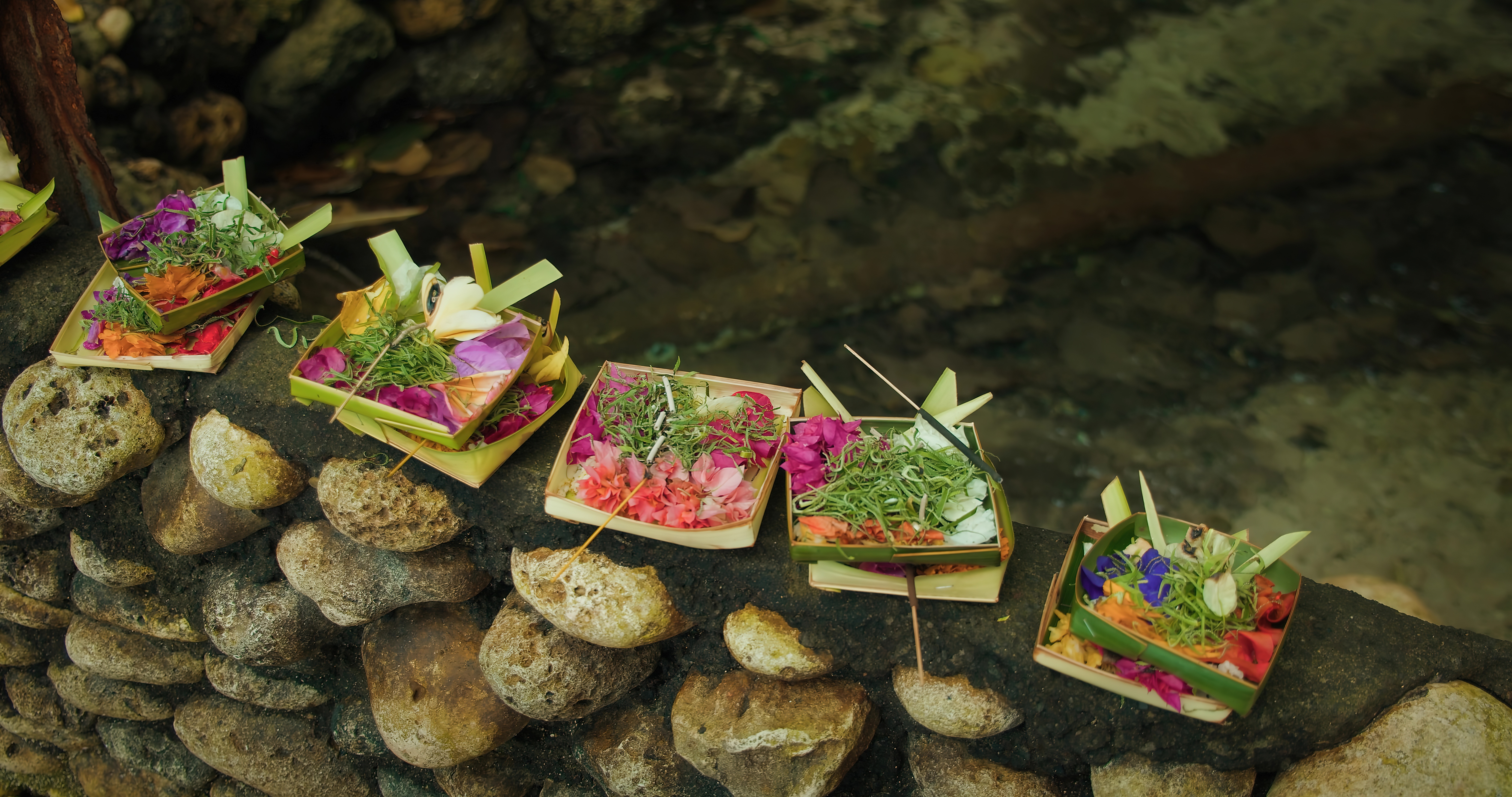
One of the first things visitors notice when arriving in Bali is the presence of small woven baskets filled with flowers, incense, and various offerings placed throughout the island. You'll find them on sidewalks, temple entrances, doorsteps, shop fronts, shrines, and even on vehicles. While they may appear simple, these offerings hold deep spiritual significance in Balinese daily life.
Known as Canang Sari, these handmade offerings are an essential part of Balinese Hindu practice and are prepared fresh each day. The word canang refers to the woven palm-leaf tray, while sari means essence or sincerity. Together, they represent a heartfelt expression of gratitude and devotion to the Gods.
Every morning, Balinese families, business owners, and community members place Canang Sari as a way of giving thanks for the blessings they have received and praying for continued balance and harmony. The flowers used in the offering are carefully arranged and often symbolize different Hindu deities, while the burning incense serves as a bridge between the physical and spiritual worlds.
Beyond their religious meaning, Canang Sari reflects one of the core philosophies of Balinese culture, which is maintaining harmony between humans, nature, and the divine. This concept is deeply embedded in everyday life across the island and can be seen in countless rituals and ceremonies throughout the year.
For visitors, Canang Sari offers a glimpse into how spirituality remains woven into the daily rhythm of Bali. Unlike traditions that are reserved for special occasions, these offerings are made every single day, rain or shine. Their constant presence serves as a reminder that Bali's culture is not simply preserved for tourism, it continues to be actively practiced by local communities.
Today, Canang Sari remains one of the most recognizable and meaningful symbols of Balinese culture, reflecting the island's unique blend of devotion, gratitude, and respect for the world around it.
2. Melasti: A Sacred Purification Ceremony
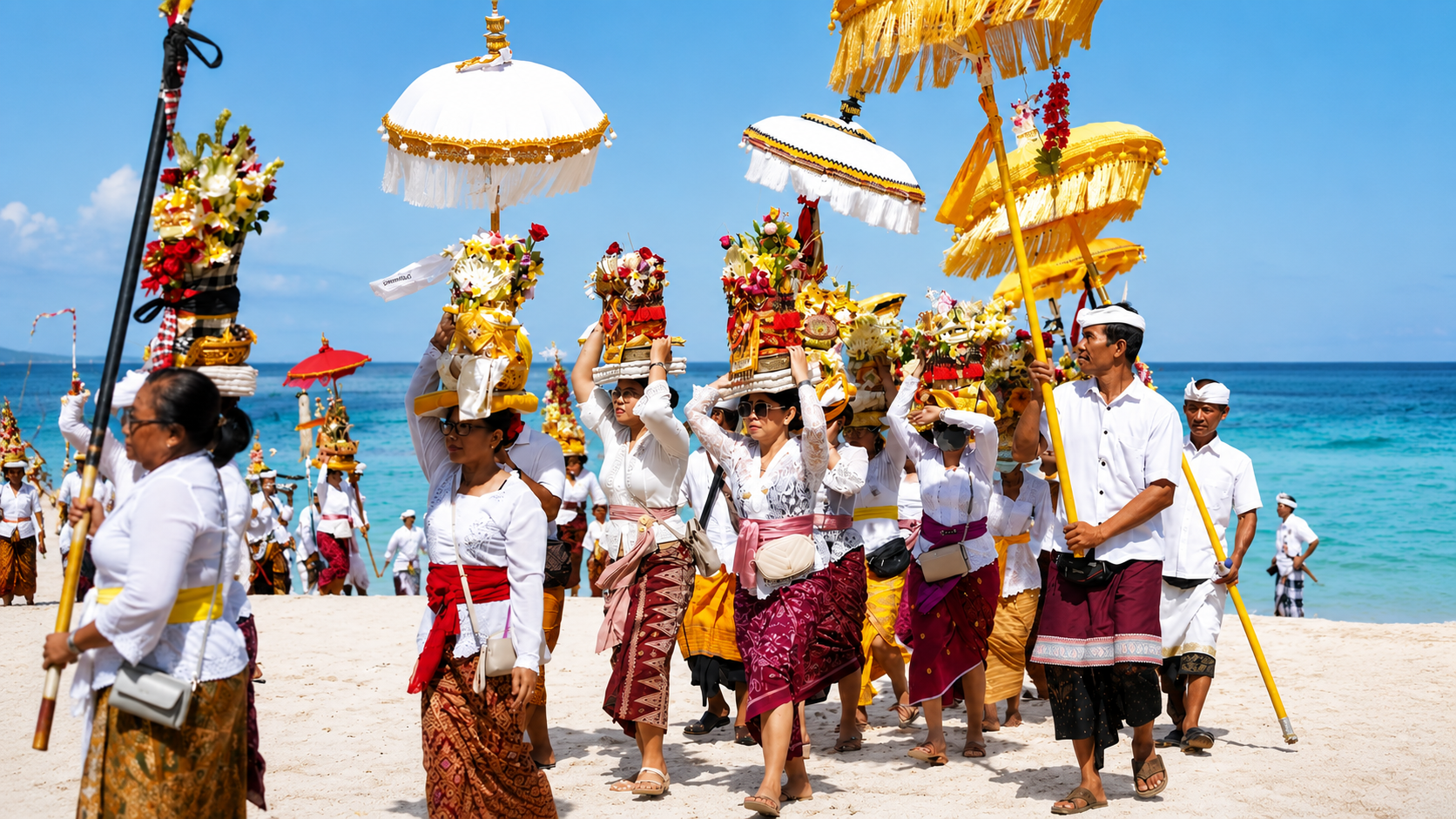
Before the celebration of Nyepi, Bali's Day of Silence, communities across the island take part in one of the most important purification ceremonies in Balinese Hinduism known as Melasti. This sacred ritual is held several days before Nyepi and serves as a spiritual cleansing process, allowing individuals and communities to purify themselves before entering the new year according to the Balinese Saka calendar.
During Melasti, sacred objects from local temples, including statues, heirlooms, and ceremonial items, are carried in large processions from villages to the sea, lakes, or other natural water sources. Accompanied by traditional music, prayers, and offerings, these processions often stretch for hundreds of meters and bring entire communities together. The atmosphere is both festive and deeply spiritual, reflecting the strong connection between religion and daily life in Bali.
Water plays a central role in the ceremony, as it is believed to possess the power to cleanse negative energies and restore spiritual balance. Through prayers and ritual purification, participants seek to remove impurities from both themselves and sacred temple objects, preparing for a period of reflection and renewal during Nyepi.
For visitors, Melasti is often considered one of the most visually captivating ceremonies on the island. Thousands of participants dressed in traditional white attire gather along Bali's beaches, creating a striking contrast to the blue ocean and dramatic coastal landscapes. The sight of colorful ceremonial umbrellas, offerings, and temple relics being carried toward the shoreline provides a rare opportunity to witness a tradition that has been practiced for generations.
Beyond its visual beauty, Melasti reflects a core aspect of Balinese culture, which is the belief that harmony must be maintained between humans, nature, and the spiritual realm. The ceremony serves as a reminder that purification is not only about cleansing physical spaces but also about restoring balance within oneself and the surrounding world.
Today, Melasti remains one of Bali's most significant annual traditions, offering both locals and visitors a meaningful glimpse into the island's rich spiritual heritage and enduring cultural identity.
3. Nyepi: Bali's Day of Silence

Unlike New Year celebrations in many parts of the world that are marked by fireworks, parties, and large gatherings, Bali welcomes the Saka New Year with an extraordinary tradition of complete silence. Known as Nyepi, this sacred day is one of the most important events in the Balinese calendar and reflects the island's deep spiritual roots.
For twenty-four hours, the entire island comes to a standstill. Airports close, businesses suspend operations, roads remain empty, and even popular tourist areas become remarkably quiet. Residents and visitors alike are expected to stay within their homes or accommodations, creating a rare moment of stillness across the island. The day is observed through four main restrictions, known as Catur Brata Penyepian: no travel, no work, no entertainment, and in many cases, fasting or limiting food consumption.
Nyepi is dedicated to self-reflection, meditation, prayer, and spiritual renewal. Rather than focusing on celebration, the day encourages individuals to look inward, evaluate the past year, and begin the new year with a clearer mind and renewed sense of purpose. For many Balinese Hindus, it is an opportunity to reconnect with themselves, their community, and the spiritual world.
The silence of Nyepi is made even more remarkable by the events leading up to it. On the evening before Nyepi, communities across Bali hold lively Ogoh-Ogoh parades, where giant handcrafted figures representing negative forces are carried through the streets accompanied by music and festivities. The contrast between the energetic celebrations and the complete silence that follows highlights the symbolic cleansing and renewal at the heart of the tradition.
For visitors, Nyepi offers a truly unique experience that is difficult to find anywhere else in the world. With virtually no traffic, limited artificial lighting, and minimal noise, Bali transforms into a place of rare tranquility. As night falls, the island's skies become exceptionally clear, revealing countless stars and, in some areas, a breathtaking view of the Milky Way. The peaceful atmosphere allows visitors to experience a different side of Bali, one defined not by activity, but by reflection and calm.
More than just a cultural event, Nyepi serves as a powerful reminder of the importance of balance, mindfulness, and taking time to pause in an increasingly busy world. It remains one of Bali's most favorite traditions and one of the many reasons the island's cultural heritage continues to captivate people from around the globe.
Experience Bali beyond the beaches.
4. Galungan and Kuningan: Celebrating the Victory of Good Over Evil
Among Bali's most important religious celebrations are Galungan and Kuningan, two sacred holidays that hold deep spiritual significance for Balinese Hindus. Celebrated every 210 days according to the Balinese Pawukon calendar, these festivals symbolize the eternal victory of dharma (good) over adharma (evil) and serve as a time for prayer, gratitude, and family gatherings.
During Galungan, Balinese families visit temples, make elaborate offerings, and come together to honor their ancestors. It is believed that ancestral spirits return to Earth during this period, allowing families to pay their respects and strengthen their spiritual connection with those who came before them. Homes, temples, and villages become especially vibrant as communities prepare for the celebrations through a series of rituals and ceremonies.
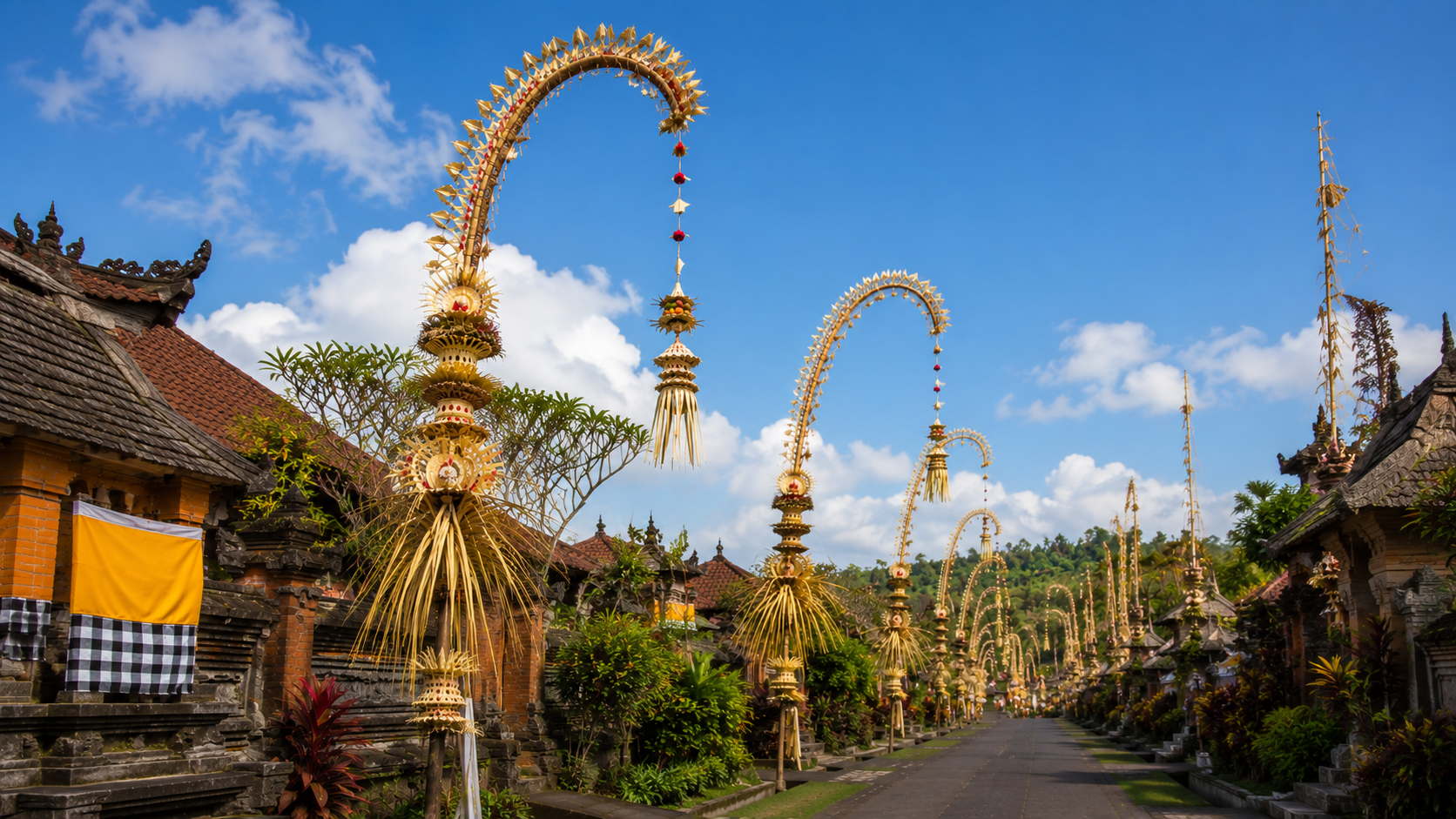
One of the most iconic sights during Galungan is the appearance of penjor (tall bamboo poles elegantly decorated with coconut leaves, fruits, flowers, and traditional ornaments). Lining roads, village entrances, and residential streets across the island, these beautifully curved structures create a striking visual display that transforms Bali's landscape. Beyond their decorative beauty, penjor symbolizes gratitude for prosperity and blessings.
The festive atmosphere extends throughout the island as families dress in traditional attire, attend temple ceremonies, and spend time together. For visitors, Galungan offers a unique opportunity to witness Bali at its most colorful and culturally rich, with ceremonies taking place in villages and temples across the island.
Ten days after Galungan, the celebrations conclude with Kuningan. This important day marks the return of ancestral spirits to the spiritual realm after their visit to Earth. Special prayers and offerings are made as families bid farewell to their ancestors and express gratitude for the blessings and guidance received during the Galungan period.
Together, Galungan and Kuningan represent more than just religious festivals, they reflect the strong values of faith, family, community, and gratitude that continue to shape daily life in Bali. For many visitors, witnessing these celebrations provides a deeper understanding of the island's living culture and the traditions that have been preserved for generations.
5. Melaspas: Blessing New Buildings
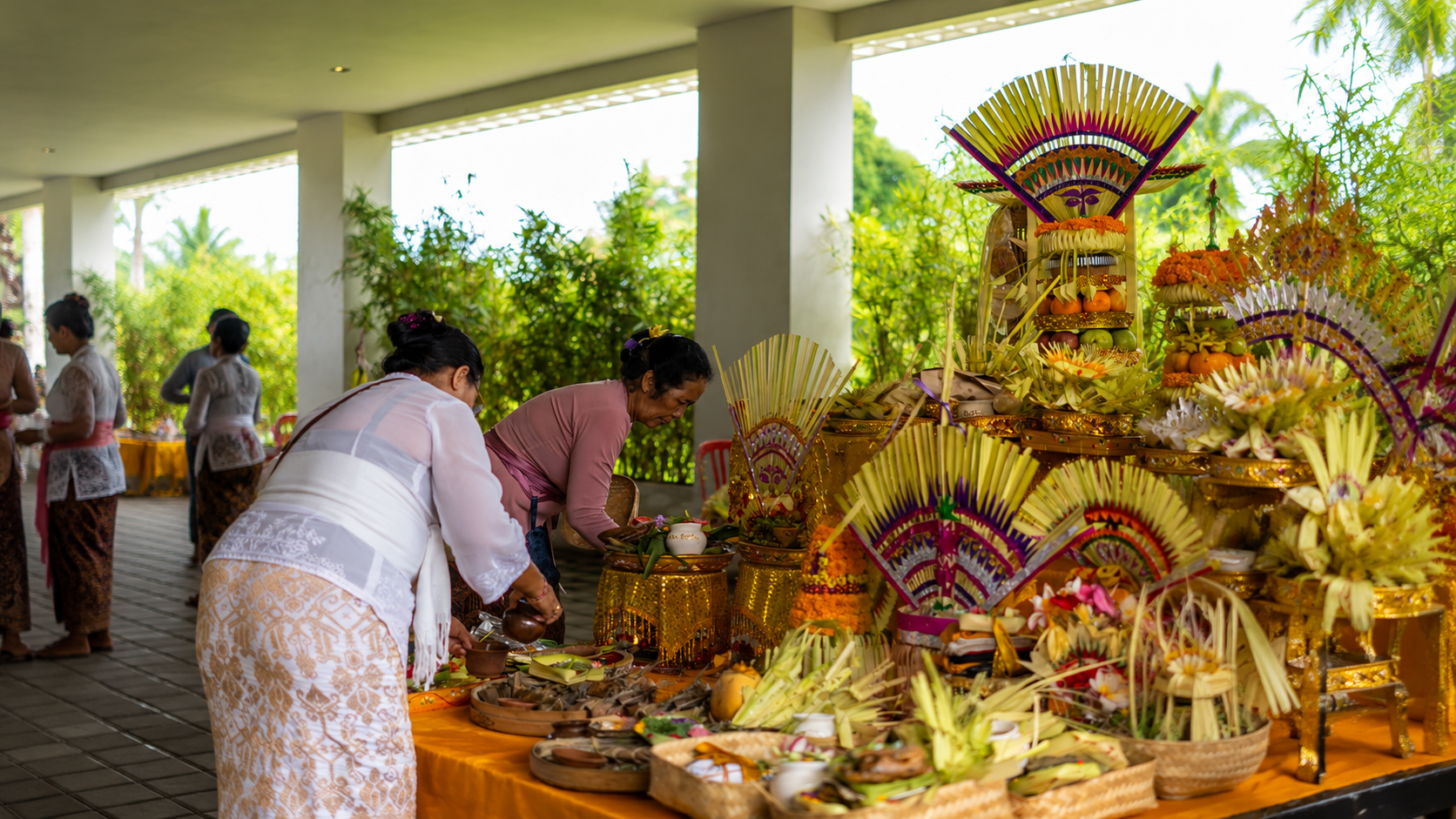
Whether it's a family home, a private villa, a restaurant, or a luxury resort, many newly completed buildings in Bali undergo a traditional blessing ceremony known as Melaspas. For property owners and investors, especially those entering Bali's real estate market, Melaspas is a meaningful milestone that marks the official beginning of a property's journey. Deeply rooted in Balinese Hindu beliefs, this ceremony is considered an essential step before a building can be officially occupied or begin operations.
Melaspas is performed to spiritually cleanse and purify a newly constructed property, ensuring that any negative energies associated with the construction process are removed. The ceremony also serves as a way to invite positive energy, protection, and blessings into space. For the Balinese, a building is not simply a physical structure, it is a place that should exist in harmony with both the spiritual and natural worlds.
During the ceremony, Hindu priests lead a series of prayers, rituals, and offerings that may involve holy water, symbolic decorations, traditional music, and community participation. Family members, property owners, staff, and local residents often gather to take part in the event, reflecting the communal nature of Balinese culture. The specific rituals may vary depending on the size and purpose of the building. The intention is to create balance between the structure, its occupants, and the surrounding environment.
Today, Melaspas continues to play an important role in Bali's property landscape, demonstrating how cultural values remain closely connected to modern development. It is one of many examples of how spirituality and daily life are intertwined on the Island of the Gods, helping preserve the unique cultural identity that makes Bali unlike anywhere else in the world.
6. Ngaben: Bali's Unique Cremation Ceremony
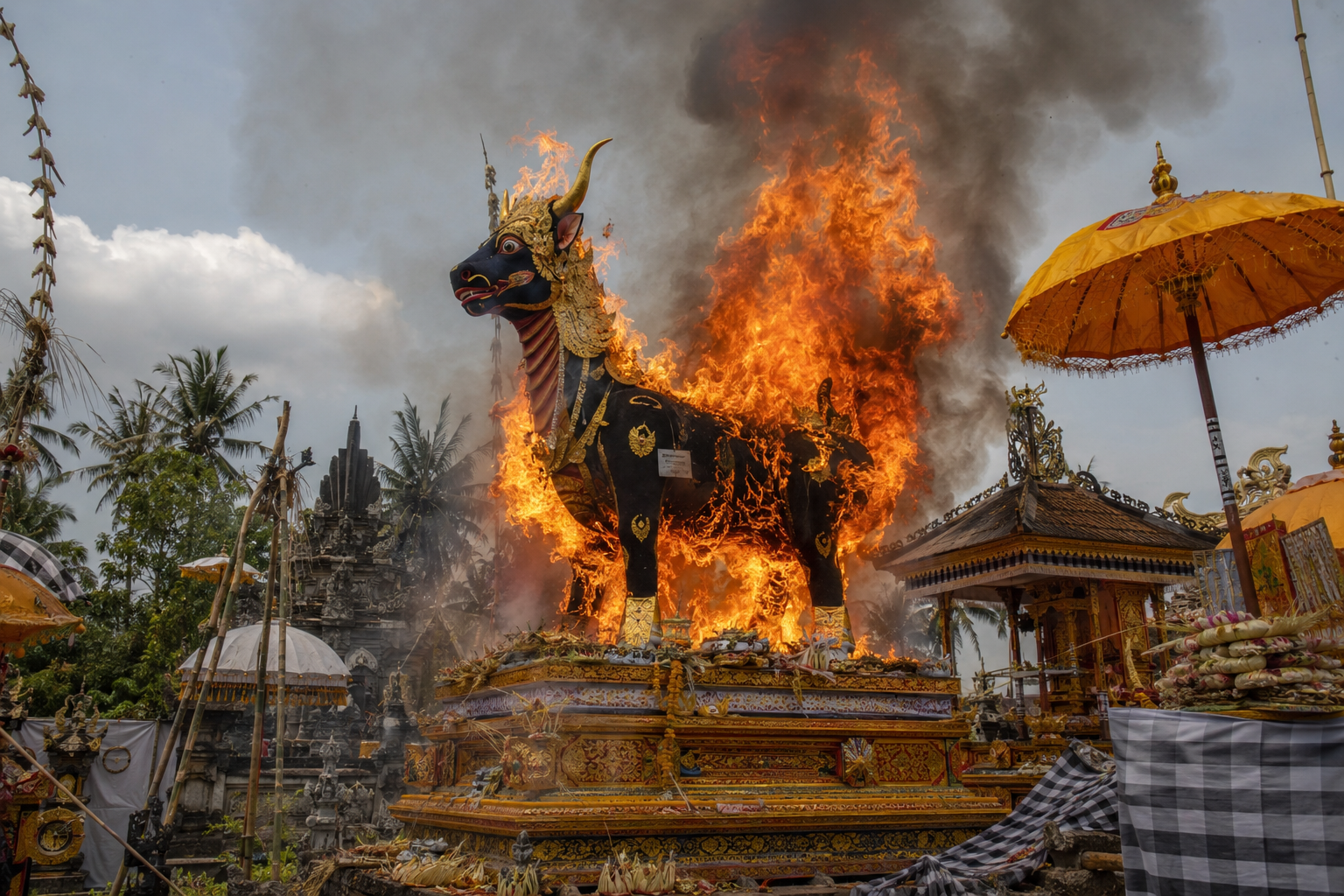
Another significant Balinese tradition is Ngaben, the island's traditional cremation ceremony and one of the most important rituals in Balinese Hinduism. While death is often associated with grief and loss in many cultures, Balinese Hindus view it differently. Rather than seeing death as an end, it is considered a transition of the soul from one stage of existence to the next, continuing its spiritual journey through reincarnation.
The primary purpose of Ngaben is to release the soul from its physical body and help it return to the spiritual realm. According to Balinese Hindu beliefs, the soul cannot fully continue its journey until the cremation ceremony has been performed. Through prayers, offerings, and sacred rituals, families seek to guide their loved ones toward a peaceful transition and eventual rebirth.
Ngaben ceremonies are often elaborate community events that require extensive preparation. Families may spend months or even years planning the ceremony, as it is considered one of the most important ways to honor deceased relatives. In some cases, multiple families come together to participate in a collective cremation ceremony, allowing communities to share the costs and responsibilities involved.
One of the most recognizable aspects of Ngaben is the procession that takes place before the cremation. Family members, villagers, and ceremonial groups accompany large, beautifully decorated structures carrying the deceased through the streets. Traditional Balinese music, prayers, and colorful ceremonial attire create an atmosphere that feels more like a celebration than a funeral.
Visitors are often surprised by the joyful and festive nature of the event. Rather than focusing solely on mourning, Ngaben celebrates the life of the individual and their journey into the next realm. The ceremony reflects the Balinese belief that death is a natural part of life's cycle and should be approached with respect, gratitude, and acceptance.
Today, Ngaben remains one of Bali's most profound cultural and spiritual traditions. It offers a unique insight into the island's beliefs surrounding life, death, and reincarnation, while highlighting the strong sense of family, community, and spirituality that continues to define Balinese culture.
7. Odalan: Temple Anniversary Celebrations
Every temple in Bali celebrates its own anniversary, known as Odalan, making it one of the most frequently observed religious traditions on the island. Unlike annual celebrations that follow the Gregorian calendar, Odalan ceremonies are held according to the Balinese Pawukon calendar, which means temple anniversaries occur every 210 days. As a result, there is almost always an Odalan taking place somewhere in Bali throughout the year.
For Balinese Hindus, Odalan is a sacred occasion dedicated to honoring the temple's founding and expressing gratitude to the deities worshipped there. In the days leading up to the ceremony, local communities work together to prepare elaborate offerings, decorate temple grounds, and organize various religious activities. The event reflects the strong communal spirit that remains an important part of Balinese life.
On the day of the celebration, temples become vibrant centers of activity filled with worshippers dressed in traditional attire. Families gather to pray, present offerings, and participate in religious rituals led by Hindu priests. The atmosphere is both spiritual and festive, bringing together people of all ages in a shared expression of faith and devotion.
Many Odalan ceremonies also feature traditional Balinese cultural performances, including sacred dances, gamelan music, and theatrical presentations that have been passed down through generations. These performances are not merely entertainment but are considered offerings to the gods, adding another layer of meaning to the celebration.
Because Bali is home to thousands of temples, ranging from small family shrines to large regional temples, visitors may encounter Odalan ceremonies in villages, neighborhoods, and major cultural sites across the island. While some celebrations are modest and intimate, others can attract large crowds and involve days of ceremonies and festivities.
For visitors, witnessing an Odalan offers a unique opportunity to experience Balinese culture in its most authentic form. Unlike cultural performances organized specifically for tourism, Odalan remains a living tradition that continues to play a vital role in daily life. It provides a deeper understanding of the island's spiritual heritage and demonstrates how religion, community, art, and tradition remain closely intertwined in Balinese society today.
The Philosophy of Tri Hita Karana
Beyond ceremonies and rituals, much of Balinese culture is guided by the philosophy of Tri Hita Karana, which translates to "three causes of well-being."
The concept emphasizes harmony between:
-
Humans and God
-
Humans and other people
-
Humans and nature
This philosophy influences everything from community life and architecture to hospitality and environmental practices throughout Bali.
Experience Bali's Tradition
Bali's traditions are an active part of everyday life. Understanding these customs allows visitors to experience Bali on a deeper level, offering a greater appreciation for the people, beliefs, and traditions that make the Island of the Gods unlike anywhere else in the world.
Through Betterplace Concierge, you can access personalized recommendations and curated experiences that showcase the rich traditions, ceremonies, and local lifestyle that make Bali truly unique. Book your experience now!


