
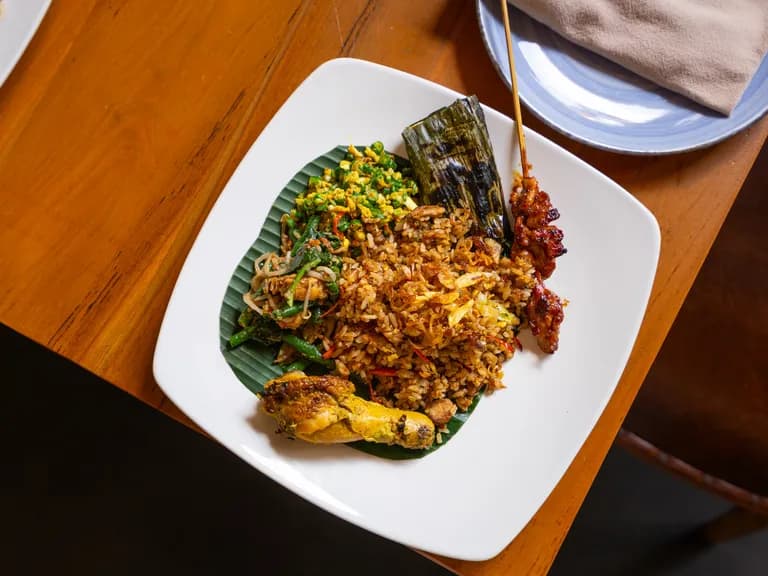
Ask anyone who has spent time in Bali what they remember most, and food usually comes up quickly. The smell of satay grilling over coconut husks at a roadside stall. A plate of nasi campur with a little bit of everything. That first spoonful of sambal matah, fresh, sharp and hotter than expected.
Local food in Bali is more than something you eat between the beach and the rice terraces. It's part of daily life on the island, closely tied to ceremonies, family cooking and traditions passed down through generations. Many Balinese dishes start from the same place: a hand-ground spice paste called base genep, made from shallots, garlic, galangal, turmeric, ginger, chilli, candlenut, lemongrass and more.
Whether this is your first visit or your fifth, this guide covers the traditional Balinese dishes worth trying, a few Indonesian favourites you'll find everywhere, and how to take the flavours home with you by learning to cook them yourself.
What Makes Balinese Food Different?
Indonesia has one of the world's most varied cuisines, and Bali has its own identity within it. Most of Indonesia is Muslim, but Bali is mainly Hindu, so pork and duck show up far more here than elsewhere in the country. Many of the island's best-known dishes are also connected to temple festivals and family celebrations, where food is made together in large quantities.
Balinese cooking is built on layers. The spice paste is the foundation, and each version is adjusted to suit what's being cooked:
-
Base genep (base gede): the complete spice paste used across many Balinese dishes
-
Base be pasih: a spice paste for seafood, orange in appearance
-
Base be siap: a spice paste for chicken, yellow from fresh turmeric
Once you understand these pastes, Balinese food starts to make much more sense. It's also why so many visitors say a dish tastes completely different in Bali than anywhere else.
Traditional Balinese Dishes You Should Try
Babi Guling (Balinese Roast Suckling Pig)
Babi guling is probably Bali's most famous dish. A whole pig is rubbed and stuffed with base genep, then slowly roasted over an open fire until the skin turns crisp. It's usually served with rice, lawar, crackling, spiced sausage and a small bowl of broth. Traditionally a ceremonial dish, it's now easy to find at local warungs across the island, often selling out by early afternoon.
Ayam Betutu and Bebek Betutu
Betutu is chicken (ayam) or duck (bebek) rubbed with a generous amount of spice paste, wrapped in banana leaf and cooked slowly for hours. The meat comes out tender and deeply aromatic. It's one of the best ways to taste what base genep can do.
Sate Lilit
Unlike standard satay, where cubes of meat go on skewers, sate lilit is made from minced fish, chicken or pork mixed with grated coconut and spices, then wrapped around lemongrass stalks or flat bamboo sticks. The lemongrass adds a subtle fragrance as it grills. It's one of the most distinctly Balinese things you can eat.
Lawar
Lawar is a traditional mix of finely chopped vegetables, grated coconut, minced meat and spices. Recipes vary from village to village, and it's often prepared together by families and communities before ceremonies. If you see lawar on a warung menu, it's worth ordering.
Tum Ayam and Pepes
Both dishes wrap spiced ingredients in banana leaf before steaming or grilling. Tum is the Balinese version, usually minced chicken with spice paste. Pepes is found across Indonesia and is often made with fish or chicken. The banana leaf keeps everything moist and gives a gentle smoky flavour.
Be Celeng Base Manis (Pork in Sweet Soy Sauce)
A comforting home-style dish of pork braised in sweet soy sauce with ginger, garlic and shallots. It's less well known to visitors than babi guling, but it's a Balinese family favourite and pairs perfectly with steamed rice.
Sambal Matah
It's a condiment rather than a dish, but no guide to Balinese food would be complete without it. Sambal matah is a raw chilli relish of shallots, lemongrass, lime leaves, chilli and warm coconut oil. It goes with almost everything, especially grilled fish and chicken.
Indonesian Favourites You'll Find Across Bali
Along with Balinese specialities, the island is full of dishes loved throughout Indonesia. These are often the easiest place to start if you're new to the local food.
Nasi Goreng and Mie Goreng
Fried rice and fried noodles are staples for a reason. A good nasi goreng, seasoned with sweet soy sauce, shallots and chilli, topped with a fried egg and served with prawn crackers, is one of the simplest and most satisfying meals in Bali.
Nasi Campur
Literally "mixed rice", nasi campur is a plate of steamed rice with small portions of several dishes: maybe some satay, vegetables, egg, tempeh, shredded chicken and sambal. It's a great way to try lots of flavours at once, and every warung does its own version.
Sate Ayam with Peanut Sauce
Chicken satay grilled over charcoal and served with rich peanut sauce is found almost everywhere, from beach stalls to night markets.
Gado-Gado and Pecelan
Gado-gado is a salad of blanched vegetables, tofu, tempeh and egg with a peanut sauce dressing. The Balinese version, pecelan, is similar and just as good. Both are ideal options for vegetarian travellers.
Soto Ayam and Beef Rendang
Soto ayam is a fragrant turmeric chicken noodle soup, perfect for a lighter lunch. Beef rendang, originally from West Sumatra, is slow-cooked in coconut milk and spices until the sauce reduces and clings to the meat. It's widely loved across Indonesia, including in Bali.
Balinese Desserts and Snacks
Don't skip dessert. Traditional sweets, known as jaje Bali, are colourful, affordable and often made with coconut, palm sugar and rice flour.
-
Dadar gulung: green pandan pancakes rolled around sweet grated coconut and palm sugar
-
Urab jagung: a sweet corn and coconut snack
-
Klepon: chewy pandan rice cakes filled with liquid palm sugar and rolled in coconut
-
Bubur injin: black rice pudding served with coconut milk
You'll often find these at morning markets, where locals pick them up for breakfast or offerings.
Tips for Enjoying Local Food in Bali
To get the most out of Bali's food scene:
-
Eat at local warungs. These small family-run eateries often serve the most authentic food at very reasonable prices.
-
Go early for popular dishes. Places known for babi guling or nasi campur can sell out by lunchtime.
-
Ask about spice levels. Balinese food can be fiery, so ask for tidak pedas (not spicy) or keep the sambal on the side.
-
Visit a traditional market. Morning markets are great for seeing the fresh produce and spices that go into Balinese cooking.
-
Be open to trying something new. Some of the most memorable dishes are the ones you've never heard of.
Go Beyond Eating: Learn to Cook Balinese Food
Tasting local food in Bali is one thing. Understanding how it's made is something else.
A Balinese cooking class is one of the most rewarding experiences you can have on the island. You learn how the spice pastes come together, why banana leaf matters, and how a few fresh ingredients turn into a full spread. And at the end, you sit down and eat everything you've made.
It's also a practical souvenir. Long after your trip, you can still make sate lilit or nasi goreng at home and bring back a little of Bali.
Balinese Cooking Classes, Arranged by Betterplace
At Betterplace, we believe a great stay in Bali goes beyond the villa. That's why our guest concierge team can arrange a cooking class for you as part of your stay, so you can enjoy one of the island's most authentic experiences without the hassle of researching and booking it yourself.
We work with trusted local cooking class partners and take care of the details: choosing the right class for your group, finding a date that fits your plans, and passing on any dietary requirements in advance.
Here's a taste of the menus available:
Traditional Balinese Cooking Class
Ideal for guests who want to get to know Bali's own cuisine, including the spice pastes that shape it:
-
Spice paste for seafood (base be pasih) and for chicken (base be siap)
-
Roasted chicken in banana leaf (ayam betutu Bali)
-
Chicken satay (sate ayam) with peanut sauce (base sate)
-
Minced seafood satay (sate lilit ikan)
-
Minced chicken in banana leaf (tum ayam)
-
Green papaya salad with chicken
-
Vegetable salad in peanut sauce (pecelan)
-
Sweet corn coconut snack (urab jagung)
-
Fried rice with chicken (nasi goreng)
-
Pork in sweet soy sauce (be celeng base manis)
Balinese & Indonesian Favourites Cooking Class
A broader menu that mixes Balinese classics with dishes loved across Indonesia:
-
The complete spice paste (base genep / base gede)
-
Beef rendang (rendang daging)
-
Chicken noodle soup (soto ayam)
-
Minced chicken in banana leaf (pepes ayam)
-
Minced chicken satay (sate lilit ayam)
-
Balinese salad (lawar Bali)
-
Vegetable salad in peanut sauce (gado-gado)
-
Fried rice (nasi goreng) and fried noodles (mie goreng)
-
Green pancakes with coconut (dadar gulung)
Whether you're a couple looking for something different, a family wanting a hands-on activity, or a group of friends who love food, a cooking class is a fun and memorable way to connect with Balinese culture.
Book a Balinese Cooking Class with Betterplace →
Why Book Through Betterplace?
-
Local knowledge: our team lives and works in Bali and knows which experiences are worth your time
-
No research needed: we arrange everything so you can focus on enjoying your holiday
-
Tailored to your group: we help you pick the class that suits your tastes, pace and dietary needs
-
Part of your stay: your cooking class fits in with the wider Betterplace guest experience, from check-in to check-out
Bring the Flavours of Bali Home
Local food in Bali tells the story of the island: its ceremonies, its families, its markets and its traditions. From a plate of babi guling to a sweet bite of dadar gulung, every dish has something to discover.
Eating your way around the island is a great start. Learning to cook these dishes yourself takes the experience a step further, and it gives you something to share long after you've flown home.
Staying in a Betterplace villa? Ask our team about arranging a Balinese cooking class during your stay.
Explore Betterplace Villas in Bali →
Frequently Asked Questions
What is the most famous local food in Bali? Babi guling (roast suckling pig) is widely considered Bali's most iconic dish. Ayam betutu, sate lilit and lawar are also well-known traditional Balinese dishes.
Is Balinese food spicy? Many Balinese dishes include chilli, especially sambals, but spice levels vary. You can usually ask for food to be less spicy or have sambal served on the side.
What should vegetarians eat in Bali? Gado-gado, pecelan, tempeh and tofu dishes, vegetable nasi campur and urab are all good choices. Most cooking classes can also adapt recipes for vegetarian guests.
Can I book a Balinese cooking class during my villa stay? Yes. Betterplace guests can ask our concierge team to arrange a cooking class with one of our trusted local partners, including passing on any dietary requirements.
How long does a Balinese cooking class take? Most classes take around half a day, depending on the menu and the provider. Our team can confirm the details when arranging your booking.