

You might even own a villa or vacation home in Bali, and you need to know it will get a constant flow of income in the vacation market. When selecting a property management company, it is significant to ensure that you are dealing with an appropriate company because the appropriate partner might assist you in maximizing the occupancy rate, performing daily tasks, and ensuring the security of your investment as you enjoy passive income.
The short-term rental market in Bali remains strong. Market data for Bali short-term rentals shows an average occupancy of about 65% and an average annual revenue of around USD $20K per listing. With that being said, there are many property management companies in Bali, so it’s important to carefully choose the right partner who can take care of your villa and help you maximize your income in the vacation rental market.
This article will explore and compare the best available options, so you can make a confident choice on what works best for you.
How We Scored Bali Property Management Services
- Scope and SLAs: Defines what services are included in the management agreement, such as operations, marketing, and maintenance, and sets measurable standards for response times, guest support, and issue resolution.
- Onboarding Speed: Covers how quickly a property is prepared for listing, including inspections, media capture, documentation, and setup. Faster onboarding means owners start earning sooner.
- Marketing and Distribution: Assesses how the company promotes villas across major booking platforms and direct channels, how actively it manages pricing, and whether it supports review performance, visibility, and booking conversion rather than simple listing placement.
- Finance and Reporting: Looks at the accuracy and transparency of monthly reports, payment timelines, expense breakdowns, and whether owners get real dashboard visibility into bookings, upkeep, payouts, and performance trends.
- Maintenance Standards: Outlines the frequency and quality of property upkeep, including cleaning schedules, preventive maintenance, and vendor coordination, to ensure guest-ready conditions year-round.
- Compliance: Ensures properties meet all local legal requirements, including licenses, permits, tax obligations, and safety regulations relevant to Bali’s villa rental market.
- Owner Feedback: Measures owner satisfaction based on communication quality, responsiveness, problem-solving, and how well the management team aligns with the owner’s goals.
- Area Coverage and Staffing: Evaluates the company’s geographic reach and staffing levels, whether they have enough local personnel and field managers to handle properties efficiently in each area.
Tip: We recommend weighing maintenance more heavily in beach zones and prioritizing brand and ADR (Average Daily Rate) for premium villas.
What Are the Best Bali Property Management Companies?

These are the 5 best Bali property management companies among more than a dozen providers reviewed for service depth, on-the-ground execution, pricing clarity, reporting quality, and overall owner support. Companies that combine operations with stronger pricing systems, guest-service infrastructure, and clearer owner visibility ranked higher than managers focused mainly on day-to-day execution.
| Company | Ideal For | Areas Covered | Fee Model | Core Services |
|---|---|---|---|---|
| 1. Betterplace Bali | Absentee owners, first-time hosts, and multi-unit owners seeking full-service management with stronger owner visibility | Canggu, Seminyak, Ubud, Uluwatu, Sanur, Nusa Dua, Berawa, Pererenan | 15% after OTA platform fees for Online Marketing, 20% after OTA platform fees for Full Management | Pricing, guest messaging, concierge services, multi-platform distribution, owner dashboard, monthly P&L, maintenance, bookkeeping, and vendor coordination |
| 2. Bukit Vista | Hosts who want tech-driven hospitality | Bukit, Uluwatu, Jimbaran and wider Bali | Inspired Branding: 15% revenue sharing, Inspired Investment: 20% revenue sharing, Enterprise Inspired Investment: custom revenue share | Branding, pricing, guest support, QA, full ops, portfolio support |
| 3. Bali Management Villas | Boutique owners seeking flexible plans | Seminyak, Berawa, Sanur and wider Bali | Full Management: 18% from the published rate, Digital Marketing: 9% from the published rate, with no monthly fee charged | Ops, staff, maintenance, guest service, marketing, SEO, reviews, reporting |
| 4. Villa Bali Management | Owners focused on cost control | Legian, Canggu, Umalas and wider Bali | Marketing Only: 10–15% per booking. Management Only: 10–15% per booking + IDR 1.2M–3.5M monthly fixed fee. Full Management + Marketing: 15–25% per booking + IDR 1M–2.5M monthly fixed fee. | OTAs, guest support, concierge, maintenance, staffing, and accounting |
| 5. Palm Living | Investors with multi-villa portfolios | North Bali, Lovina / Singaraja area | No public management fee schedule listed. Palm Living asks owners to contact them directly for package services and rates. | Bookings, contracts, payments, inventory, permits, tax advice, maintenance |
1. Betterplace Bali
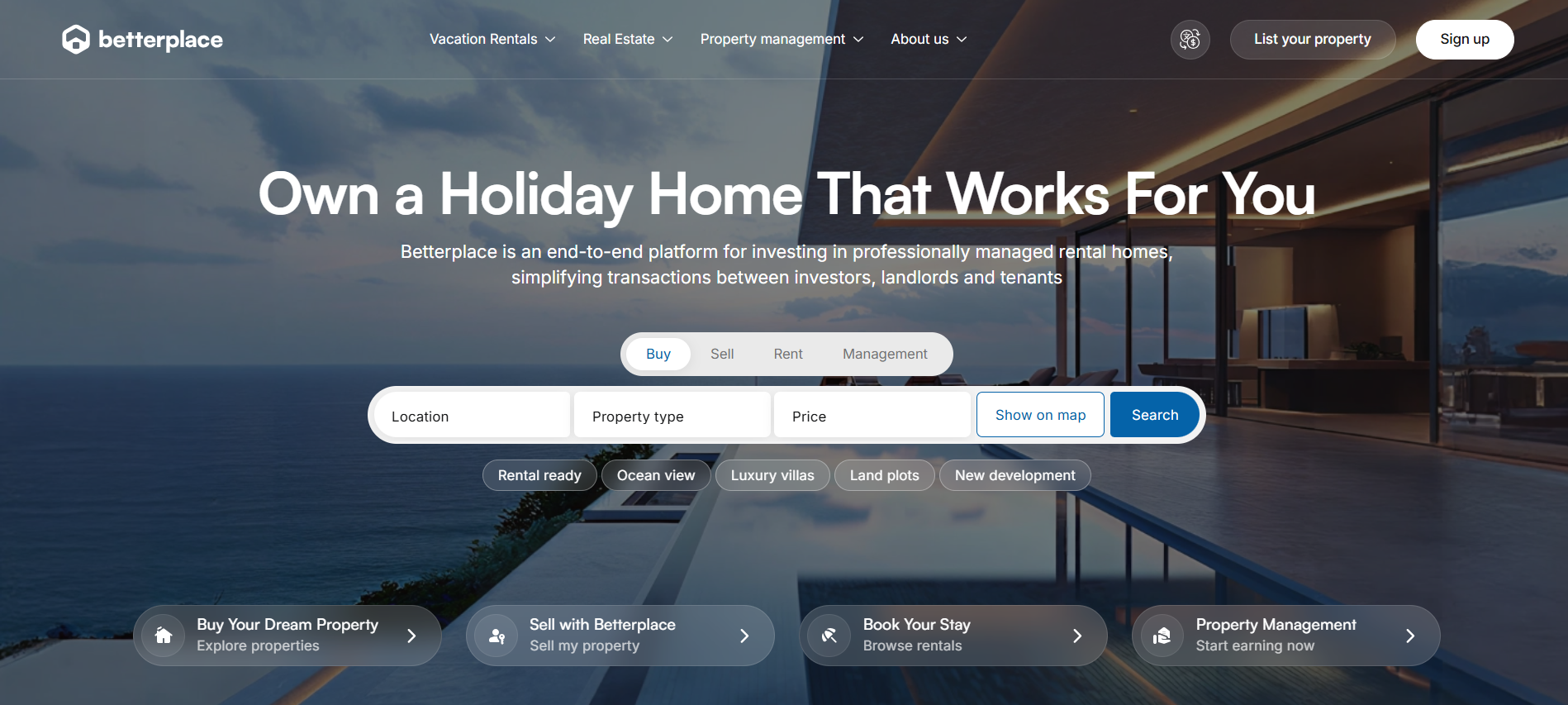
Betterplace Bali stands out in this comparison because it combines local property operations with a broader owner and guest-service system than most Bali managers publicly document. Public company materials highlight $110M+ in assets under management, 300+ full-time employees, and 200K+ guests stayed with the company.
Beyond day-to-day property management in Bali, Betterplace positions itself around pricing, booking flow, owner visibility, guest support, and adjacent owner services. Its public materials highlight structured pricing packages, an owner dashboard, monthly rental income payouts, guest support, concierge services, and broader support around investment, setup, and sales-related workflows.
Snapshot: who it is for
Best for absentee owners, first-time hosts, and multi-unit owners who want more than basic villa oversight. It is a strong fit for owners who want clear reporting, structured pricing, broader booking support, a concierge-backed guest experience, and less day-to-day involvement without losing visibility into performance.
Area presence
Betterplace Bali is active across Canggu, Seminyak, Uluwatu (Bukit), Ubud, Sanur, and Nusa Dua, with coverage often extending to sub-zones like Berawa and Pererenan.
Core services
Expect a wider service stack than a basic management setup: structured pricing, broader booking distribution, owner dashboard visibility, monthly payouts, guest handling, concierge support, vendor coordination, and ongoing operational control designed to reduce owner workload while improving performance.
- Rental projections: Detailed rental income projections with quarterly market updates.
- Content and setup: Professional visual content and listing preparation.
- Distribution: Global listing distribution across best-performing booking platforms.
- Pricing: AI-powered dynamic pricing with active updates tied to demand.
- Guest handling: 24/7 booking management, guest communication, and concierge services.
- Owner Dashboard: Rental statistics, monthly P&L, future bookings, upkeep reports, and payout visibility.
- Operations: Property staff management, check-ins and check-outs, daily housekeeping oversight, utility payments, vendor coordination, and digital bookkeeping.
Onboarding and support
Onboarding starts with a property review and earnings projection, followed by media setup, listing preparation, pricing configuration, and operating SOP rollout before launch. Betterplace states that most villas can go live within a few weeks, depending on the property’s readiness and setup needs.
Once live, owners track performance through the dashboard while the team handles bookings, guest communication, operational coordination, and ongoing support. This structure is designed to move owners from setup to launch to first payout with minimal day-to-day involvement.
Pricing and fees notes
Betterplace Bali offers two clearly structured models.
- Online Marketing: 15% after OTA platform fees. This package focuses on rental projections, visual content, distribution, pricing, booking management, guest support, concierge services, dashboard reporting, and monthly payouts, while on-the-ground operations remain with the owner.
- Full Management: 20% after OTA platform fees. This package adds local operations, in-person check-ins and check-outs, staff management, daily housekeeping oversight, pool and garden coordination, 24/7 on-call maintenance, utilities handling, cost control, and bookkeeping.
Public pricing pages also highlight owner controls such as blocking personal stay dates, approving larger CAPEX above set limits, and using your own cleaners if preferred.
Tip: Always request a one-page fee breakdown with all inclusions and assumptions before signing.
Key strengths
Key strengths go beyond basic full-service management.
- Owner visibility: Betterplace gives owners a stronger reporting layer through its dashboard, monthly statements, future bookings view, upkeep tracking, and payout visibility.
- Guest-service depth: The company combines 24/7 booking management with concierge support, which creates a broader service experience than basic guest messaging alone.
- Revenue support: Pricing, distribution, review-sensitive operations, and structured booking handling work together to support stronger occupancy and booking quality.
Best fit: Ideal for owners who want a more complete operating and revenue platform, not just a manager to handle day-to-day tasks.
2. Bukit Vista
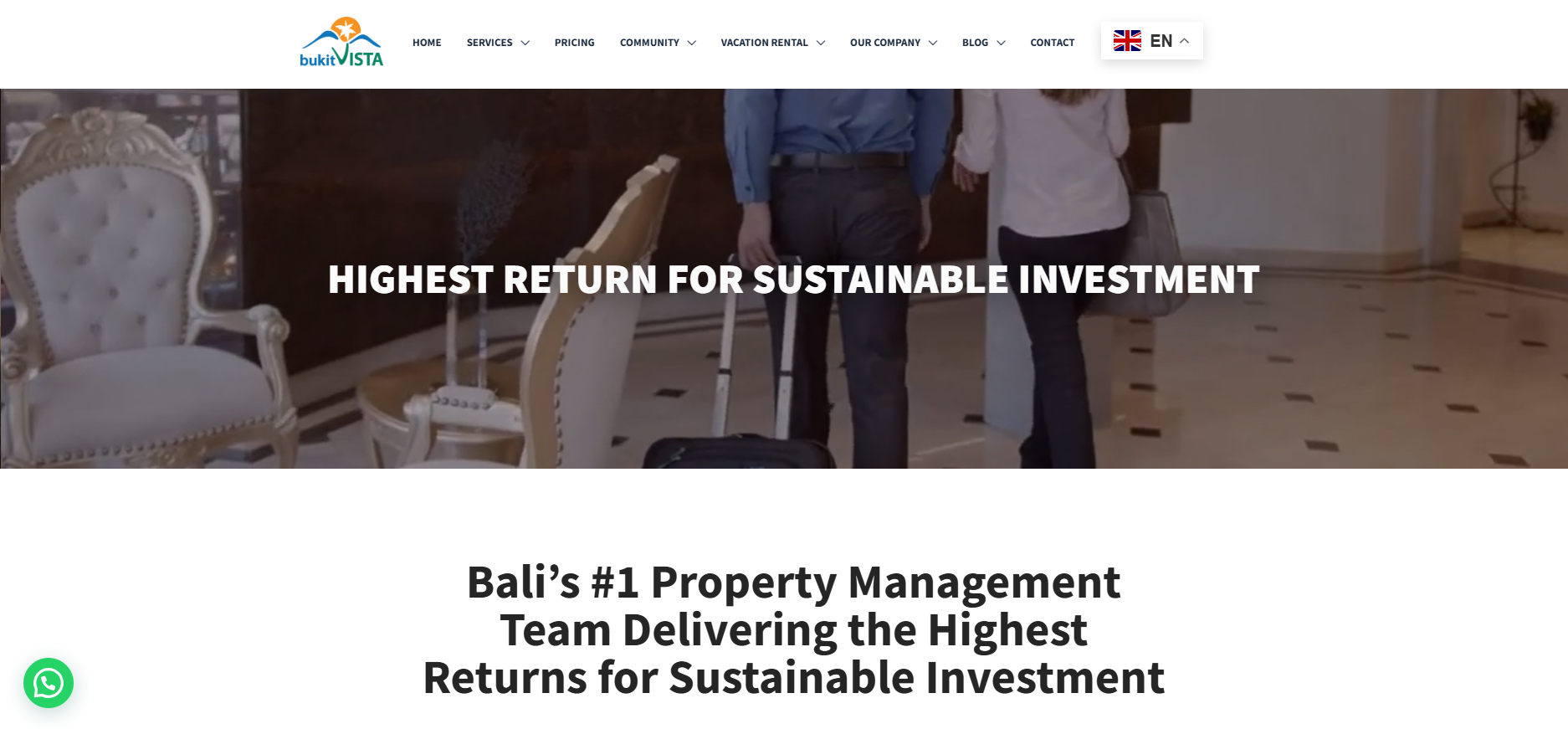
Bukit Vista is another property management company that combines hospitality with smart tech. The company uses data-driven tools and dynamic pricing to support smoother stays and stronger reviews.
They also offer dynamic, date-based pricing, and owners enjoy consistent income with less day-to-day involvement, supported by the BV GO owner app and monthly report dashboards. Owners also benefit from transparent dashboards, proactive updates, and data-driven pricing that protects both ADR and guest satisfaction.
For owners who prefer a digital-first, results-driven setup with less day-to-day involvement, Bukit Vista is a well-established management partner in Bali.
Snapshot: who it’s for
Best suited to owners prioritising automation and steady returns, with tech-driven pricing and round-the-clock guest support.
Area presence
Bukit Vista is heavily present on the Bukit Peninsula, including Uluwatu, Bingin, and Jimbaran, and is active in Canggu and Sanur.
Core services
Core services include data-driven operations, multi-channel distribution, automated pricing, and transparent owner reporting to deliver consistent stays with hands-off ownership.
- Dynamic pricing: Automated adjustments to optimise occupancy and revenue.
- Guest support: 24/7 communication and assistance.
- Inspections: Regular property checks and quality control.
- Distribution: OTA listing optimization and direct booking setup.
- Operations: Housekeeping and maintenance coordination.
- Owner portal: Real-time app (BV GO) with financial and performance reports.
Onboarding and support
Bukit Vista’s onboarding includes a property audit, professional photos, optimized listings, and competitive pricing setup before going live. Each villa is assigned a dedicated manager, supported by guest and operations teams, providing smooth daily operations and responsive guest support. Owners can track performance through the BV GO app, with real-time booking data, revenue updates, maintenance visibility, and detailed financial reporting that provide full transparency and control.
Pricing and fees notes
Bukit Vista offers four management packages depending on your needs. “Delightful Property” provides custom pricing per bedroom per month, which is ideal for those who want constant housekeeping and upkeep without full management. “Inspired Branding” charges a 15% revenue share and focuses on marketing, visibility, and quality assurance. “Inspired Investment” runs on a 20% revenue share and provides full-service management with intelligent pricing and revenue optimization. For larger portfolios, the “Enterprise Inspired Investment” plan uses a custom revenue-share percentage and full-service scope tailored for multi-unit projects and long-term ROI growth.
Key strengths
Key strengths centre on technology, operational performance, and transparent owner reporting.
- Tech and pricing: Advanced tools and data-driven pricing.
- Performance: Strong occupancy and guest ratings.
- Transparency: Clear reporting and owner dashboard.
Best fit: Ideal for owners who value automation, strong marketing, and a data-backed approach to steady returns.
3. Bali Management Villas

Bali Management Villas has built a strong reputation for personal service and consistent standards. The company presents itself as highly hands-on and responsive. It publicly states that it manages 300+ properties and employs 200+ well-trained staff, which supports its claim to operational scale. They have their own team that focuses on tailored attention, with assigned account managers who support faster responses and smoother operations. Guest satisfaction remains consistently strong, and maintenance quality remains high across villas.
Owners appreciate their proactive communication, simple monthly reports, and clear breakdowns of expenses and bookings. Balanced pricing strategies and broad distribution help maintain booking consistency across seasons. For owners who prioritise personal service and reliable communication, Bali Management Villas is a dependable option.
Snapshot: who it’s for
A fit for owners who value close communication, quick responses, and boutique-style oversight backed by a sizable local team.
Area presence
Active in Seminyak, Canggu, Berawa, Umalas, Ubud, Sanur, and Uluwatu (Bukit).
Core services
Core services include on-site operations, guest support, e-commerce distribution and rate management, routine inspections with documentation, and transparent monthly owner reporting.
- Guest communication: Concierge coordination daily 08:00–24:00 (7/7).
- Housekeeping: Daily operational monitoring.
- Inspections: Regular villa inspections.
- Distribution: OTA e-commerce distribution and synchronized calendars.
- Owner reporting: Monthly reports with detailed transactions (P&L).
- Vendors: Pool and garden, housekeeping, and on-call maintenance.
Onboarding and Support
Onboarding starts with a preliminary property inspection and an owner meeting to align requests. After signing, quality control, operations, and marketing teams prepare the villa for guests, including standards checks and listing readiness.
Support is hands-on: scheduled inspections with area managers, a 24/7 villa manager contact for guest issues, monthly owner reports issued mid-month, and a dedicated villa consultant for updates and escalations.
Pricing and Fees Notes
The revenue share model is 9% or 18%, depending on property type and scope of services. Villa Bali Management offers two packages to suit different owner needs: the Digital Marketing Package (9%) focuses on professional photography and videography, website setup, and distribution across booking channels, while leaving daily operations to the owner.
The Full Management Package (18%) covers villa operations and staff management, maintenance, housekeeping, financial reporting, and guest service available daily 08:00–24:00, providing a fully hands-off experience for property owners.
Key strengths
The core advantages are hands-on management, quick response times, and steady maintenance standards.
- Service model: Boutique style with a strong local team.
- Responsiveness: Fast replies and proactive communication.
- Upkeep: Reliable maintenance and clear owner updates.
Best fit: Ideal for owners who value trust, personal service, and consistent standards over complex tech systems.
4. Villa Bali Management
Villa Bali Management has been around since 2010 and currently looks after more than 160 villas across Bali. They handle everything from marketing and staffing to maintenance and guest services, and give owners a complete, worry-free management experience. Their long-term experience and on-the-ground scale allow them to maintain consistent property standards and smooth communication with both guests and owners. Many clients highlight their experienced local staff and dependable approach to upkeep and guest relations.
The team combines Balinese hospitality with data-led pricing, helping keep villas booked year-round without relying on deep discounts. Owners typically value the consistent property standards, and guest requests are handled quickly and consistently. It’s a solid option for owners who want sustainable income and smooth communication.
Snapshot: who it’s for
Best for villa owners who want stability and reliable cash flow over rapid growth. It’s ideal for long-term rentals or mixed short stays, with a focus on clear reporting and responsive, hands-on management.
Area presence
Covers Seminyak, Canggu (Berawa), Umalas, Uluwatu (Bukit), and Ubud, providing on-the-ground management, guest operations, and distribution support across these zones.
Core services
Core services include on-site operations, multi-platform distribution and pricing, documented inspections, and transparent monthly accounting.
- Guest communication: From booking to checkout.
- Housekeeping: Schedules and photo-documentation inspections.
- Distribution: OTA listings with optimized pricing.
- Maintenance: Routine upkeep and vendor coordination.
- Owner reporting: Monthly income and expense reporting.
- Long stays: Support for long stay contracts and renewals.
Onboarding and support
Starts with a site visit, inventory/condition reporting, and a professional photoshoot, then updated listings across major OTAs with dynamic pricing. Pricing rules are finalized before going live. Each property gets a dedicated manager/team for day-to-day coordination, with guest support available 24/7. Owners receive transparent monthly reports, with support for urgent requests via published email and phone contacts.
Pricing and fees notes
Villa Bali Management offers three tiers: Marketing Only (10–20%), which covers listings, guest support, and reporting; Management Only (10–15% + monthly fee) is for on-site operations and maintenance; and Full Management + Marketing (15–25% + monthly fee), which combines both for complete end-to-end service.
Key strengths
Strengths focus on experienced local staffing, stable performance, and reliable on-the-ground support.
- Team: Strong local team with years of experience.
- Performance: Consistent occupancy and solid upkeep.
- Vendors: Reliable vendor relationships and property care.
Best fit: Great for owners who want a dependable, steady-income property management partner that runs smoothly with minimal oversight.
5. Palm Living
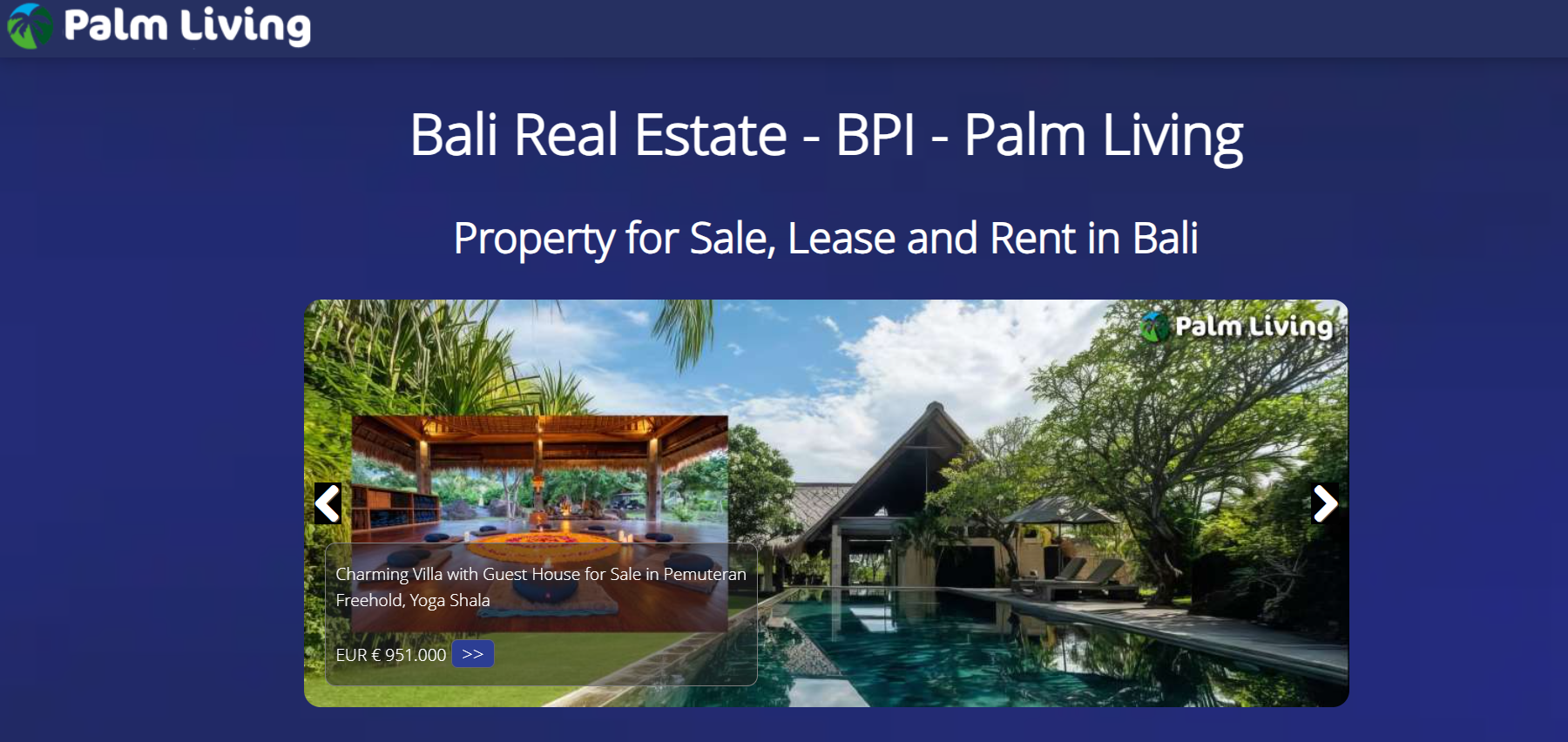
Palm Living operates as a boutique, owner-first manager with over 22 years in North Bali. The team prioritizes personalized service and careful attention to each villa rather than scale. The company highlights customized marketing and attentive guest care that foster repeat stays and positive ratings. Performance details are typically shared on a villa-by-villa basis during onboarding and in owner reporting.
The management style is hands-on and transparent. Owners receive clear updates without being overloaded. Guest feedback often highlights warm communication and quick responses.
Snapshot: Who it’s for
Best suited for owners who value close communication, transparent updates, and a boutique experience. Perfect for smaller portfolios or individual villas.
Area Presence
Primarily North Bali (Lovina / Buleleng / Seririt), with inventory clustered along the north coast. The operation is focused on North Bali rather than the Seminyak–Canggu corridor.
Core Services
Core services cover on-site operations, booking management, guest care, marketing and reservations, accounting, and vendor coordination.
- Guest communication and check-in support: Communication with guests and assistance at arrival and departure.
- Housekeeping and turnover inspections: Scheduled cleaning and documented changeover checks.
- Booking & rental management: Handling inquiries, reservations, and contracts.
- Marketing & reservations: Property presentation and reservation handling, with pricing managed through the agreed approach.
- Accounting and monthly summaries: Bookkeeping and monthly booking reports.
- Vendor coordination: Gardens, pools, AC service, and routine maintenance.
Onboarding and support
Begins with a full audit, inventory, and professional media refresh. Listings are optimized across channels before going live. Each owner is paired with a dedicated contact, and support is available via WhatsApp and email, ensuring quick resolution and proactive follow-up.
Pricing and fees notes
Pricing is typically quote-based and confirmed in writing based on villa scope and service level. The package typically covers operations oversight, marketing, and guest communication. Variable operating costs such as utilities, laundry, deep cleans, and paid ads should be itemised in the agreement for full cost visibility.
Key strengths
Palm Living’s strengths centre on boutique attention, clear owner visibility, and service-led guest care.
- Boutique attention: Close owner relationships.
- Owner updates: Transparent communication and monthly accounting summaries.
- Guest experience: Service-oriented operations that support positive reviews and repeat stays.
Best fit: Ideal for owners who are looking for a more personal, boutique-style management experience with steady returns and clear communication.
What Services Matter in Bali Property Management?
The most important services in Bali property management are those that make sure the property is compliant legally, provide consistent operations, and have a strong rental performance. A good management company handles everything from guest experience to maintenance and marketing, and allows owners to earn a steady income without daily involvement.
Operations and Staffing
Strong staffing and structure are important for effective property management in Bali. Clear rosters, maintenance schedules, written SOPs, and a reliable guest-service layer help keep operations running smoothly without constant owner oversight. The strongest managers combine field execution with fast communication, clear escalation paths, and enough operational depth to maintain standards during high-turnover periods.
Marketing and Bookings
Top Bali managers do more than place a villa on Airbnb and Booking.com. Stronger operators combine active pricing, broader channel coverage, review support, fast guest communication, and clear listing content to improve both visibility and conversion. The best setups do not treat marketing and operations as separate systems. They work together to support occupancy, ADR, and guest satisfaction over time.
Maintenance and Vendors
A reliable manager runs preventive schedules for pools, ACs, and gardens to keep systems reliable. They use vetted vendors, respond quickly to urgent maintenance needs, and provide documented inspections and work orders before and after each job. This keeps villas guest-ready and protects assets from costly surprises.
Finance and Reporting
Expect more than a simple monthly P&L. Strong managers provide clear occupancy, ADR, net payout, and expense visibility, ideally through an owner dashboard that also shows future bookings, upkeep updates, and historical performance in one place. Reporting should help owners make decisions, not just review last month’s numbers.
Payouts and Billing
Platforms like Airbnb usually send payouts about 24 hours after a guest checks in. From there, bank transfers or international wires typically take around 3–7 business days, depending on the payout method and bank. Most owners also receive a monthly statement that summarizes all bookings and expenses.
What’s Usually Included vs. Extra
Typical Bali PM agreements bundle core operations, while other items are billed on top. The outline below helps separate common inclusions from costs that usually appear as extras.
|
Item |
Typical coverage in Bali PM agreements |
|
Included |
Daily operations oversight, guest communication, channel/OTA management, basic maintenance coordination |
|
Extra (billed separately) |
Deep cleans, linens and laundry, utilities, paid advertising, major repairs, and CapEx |
How Does Onboarding Work In Bali?
The onboarding process for Balinese villas follows a structured sequence to ensure the property is legally compliant, well-prepared, and ready for rental. Managers verify permits, inspect the property, create listings, set pricing rules, and launch the villa online with early performance checks.
Docs and permits checklist
- Documentation Review: Gather and review all ownership and rental documents for compliance.
- Permit Verification: Confirm validity with local authorities or notaries.
- Inventory and Condition Report: Record all furniture, amenities, and their condition.
- Media Capture: Take professional photos and videos for marketing.
- Listing Builds: Create optimized listings on major booking platforms.
- Pricing Rules: Set dynamic or seasonal pricing strategies.
- SOPs: Define procedures for cleaning, guest service, and maintenance.
- Go Live: Publish listings and begin accepting bookings.
- First Report and Early Tweaks: Review early performance data and adjust pricing or operations as needed.
Media and listings
Professional photos and videos capture your villa’s best angles and atmosphere. Strong managers also write clear listing copy, set house rules, and keep consistent branding across channels to attract the right guests.
First month optimization
After going live, your manager will fine-tune pricing and minimum stay rules to match demand. They set response time targets for guest messages and focus on earning early positive reviews to improve visibility and trust. The goal is to create quick traction and steady bookings from the start.
Where Do Top Companies Operate In Bali?

Top managers cover Canggu, Berawa, and Pererenan for high guest turnover and fast response needs. Seminyak and Legian mean tight schedules and quick maintenance, whereas Uluwatu (Bukit Peninsula) and Ungasan are farther from the airport and main hubs, so strong vendor networks and smart logistics planning support reliable response times.
Ubud, Sanur, and Nusa Dua typically favor calmer stays and longer planning cycles, which still require steady upkeep and logistics.
South Bali Hotspots
High traffic and strong demand and ADR signals in areas like Canggu, Seminyak, and Uluwatu mean frequent check-ins, shorter stays, and faster turnarounds. These areas are operationally intensive, with frequent turnovers and higher coordination needs. A strong local team can keep response times quick and guest satisfaction high.
Central and East
Ubud, Sanur, and Nusa Dua attract longer or more planned stays focused on wellness and resort amenities. Seasonality is softer, with fewer last-minute bookings but steadier occupancy. Managers here focus on consistent upkeep, smooth guest communication, and experience-driven service over volume.
Overall Area Performance
Areas like Canggu, Seminyak, and Uluwatu show strong demand and pricing power, while Ubud and Sanur attract guests seeking longer, wellness-focused stays. Surf and wedding destinations such as Uluwatu and Bingin on the Bukit, and Pererenan near Canggu, also perform well, especially during peak seasons.
Recent market roundups commonly highlight Canggu, Seminyak, and Uluwatu among top performers, with Ubud and Sanur noted for extended-stay and retreat bookings.
Why Compliance Matters for Villa Rentals in Bali?
Running a villa rental in Bali means making sure everything is properly licensed and zoned, with the right tax and guest registration in place. Many local property guides remind owners and investors to double-check that their permits and tax documents are fully compliant with current regulations.
Tip: Always confirm current regulations and insurance requirements to avoid fines or disruptions.
Risk Controls
Good property managers plan for problems before they happen. They document clear incident steps, make sure vendors carry valid insurance, and keep safety gear like fire extinguishers and first aid kits on-site. Simple guest screening also helps reduce avoidable risk, protecting both your property and your peace of mind.
How to Choose the Best Bali Property Management Company
When reviewing a potential management company, it’s important to know not just what to ask for, but also how to read and understand what they provide. A good manager will give you clear, easy-to-read performance reports each month that outline occupancy, average daily rates (ADR), expenses, and your net payout. You should also expect short notes explaining why numbers changed — for example, if occupancy dipped due to seasonality or rose because of a pricing adjustment. These details help you understand your villa’s real performance, not just raw data.
Here’s a checklist to guide your decision:
- Ask for sample performance and financial reports to see how they track results.
- Request a full fee breakdown with inclusions to ensure full cost clarity.
- Confirm service level agreements (SLAs) and support coverage hours.
- Confirm the priority support route for urgent maintenance and time-sensitive guest requests.
- Check their tech stack and owner portal for real-time updates.
- Ask for three or more owner references to understand their experience.
- Review the exit clause and notice period in case you ever want to switch.
- Request proof of insurance and vendor coverage for liability protection.
- Ask for a 90-day onboarding and performance plan to ensure a smooth setup.
- Finally, compare clarity, responsiveness, and transparency across providers before you sign.
How to switch managers smoothly
Switching managers can be simple with a clear handover plan.
- Confirm calendar and listing ownership.
- Set blackout dates for transition.
- Transfer vendor and staff contacts.
- Review all upcoming bookings and deposits.
- Use a guest message template to ensure a seamless guest experience.
Why Choose Betterplace Bali Now?
Betterplace Bali ranks first in this comparison because it combines more layers of owner value than a standard management setup. It covers operations, pricing, guest communication, owner reporting, and maintenance, but it also adds broader distribution, dashboard-based visibility, concierge services, monthly payouts, and adjacent support around setup, investment, and property-related decisions.
Public materials make that broader model easier to verify than with many local competitors. Betterplace currently highlights 15% Online Marketing and 20% Full Management pricing, global distribution across 25+ platforms, data-driven dynamic pricing updates multiple times a day, 24/7 booking management, 24/7 concierge services, owner dashboard reporting, monthly rental income payouts, and a broader Bali villa management model than many competitors.
Conclusion
Bali’s best property managers differ in scale, tech depth, and service style, but the strongest operators share a few traits: clear scope, transparent reporting, reliable field execution, and pricing that adapts to demand. Some owners will prefer boutique managers with close communication, while others will benefit more from a broader operating platform with stronger visibility, pricing systems, guest-service depth, and owner controls.
The right choice depends on your ownership style and growth goals. Lock scope and fees in writing, review sample reports, confirm onboarding timelines, and check how the manager handles pricing, reviews, guest service, and payouts, not just maintenance. That is usually where the real performance difference shows up.
FAQs
How much do Bali property management companies charge?
Based on publicly available information, most Bali property management companies use percentage-based pricing, but the exact structure varies by package scope. Betterplace publicly lists 15% after OTA platform fees for Online Marketing and 20% after OTA platform fees for Full Management. Other providers often price within a similar general range, but owners should compare what is actually included before assuming the fees are equivalent. Extras such as utilities, laundry, deep cleans, paid ads, major repairs, or CAPEX may still sit outside the core management fee.
What does a Bali property management contract include?
Contracts outline terms, exit notice, fees, SLAs, inclusions, and liability. They should also clarify insurance, issue resolution, and data ownership. Ask for a sample contract and schedule before signing to confirm what’s included, how long it lasts, and what happens if you want to end the agreement.
How fast can my villa go live?
Launch timing depends on permits, media readiness, staffing, and the amount of setup needed. In many cases, villas can go live within a few weeks once pricing, listings, and operations are ready. Owners should ask for a clear launch plan that covers media, pricing, SOPs, channel setup, and the date of the first expected payout.
Which Bali areas have the strongest occupancy and ADR?
It really depends on the season, but Canggu, Seminyak, and Berawa lead for high ADR and steady bookings. Ubud and Sanur attract long stays and wellness guests, while Uluwatu and Pererenan peak in surf and wedding seasons.
Can I keep my cleaners and vendors?
Yes, but each option has different operational implications. Your own teams may save money, but need oversight. Manager teams bring training, standards, and backup support. Confirm approval steps, SLAs, and costs in writing to keep responsibilities clear and ensure quality stays consistent.
Who holds guest payments and deposits?
Most use OTA or PMS platforms that release funds after check-in. Some managers use trust accounts for direct bookings. Expect payouts within 5–10 days, along with monthly reconciliation reports that show bookings, fees, and any adjustments or reconciliations.
What monthly reports should I expect?
You should expect a clear monthly P&L, occupancy, and ADR summary, maintenance visibility, payout tracking, and guest-feedback visibility. Stronger managers also provide a dashboard view with future bookings, live performance analytics, and upkeep reporting so you can understand both what happened last month and what is coming next.
How are maintenance emergencies handled?
Most top firms have 24/7 response teams with photo proof and quote thresholds. You approve larger repairs before work starts. Expect quick communication via WhatsApp or email, so issues get solved fast without disrupting guests or your peace of mind.
Do I need permits to rent my villa?
Yes. You’ll need rental permits, guest registration, and sometimes business tax IDs. Rules can differ by area, so always confirm current requirements with your manager or legal contact before listing your villa to stay compliant and avoid future fines.
Can I switch managers mid-season?
Yes, but plan carefully. Confirm calendar ownership, vendor contacts, and deposit transfers first. Schedule blackout dates during the transition and use clear guest communication templates to protect your reputation and keep guest communication consistent with ongoing bookings or payments.
How do managers improve reviews and rankings?
They improve reviews and rankings by combining fast guest communication, consistent housekeeping standards, proactive issue resolution, smart pricing, and structured follow-up after the stay. The strongest managers also support the guest experience beyond basic messaging, because better service quality usually improves both reviews and ranking performance over time.
What KPIs matter in the first 90 days?
We recommend tracking occupancy, ADR, net payout, response time, and five-star share. Review performance weekly in the first month, then monthly. This helps confirm your manager’s systems are working and your villa is trending in the right direction.