The five best temples in Bali to visit are Uluwatu Temple, Tanah Lot, Lempuyang Temple, Besakih Temple and Tirta Empul. Uluwatu and Tanah Lot are unbeatable at sunset, Lempuyang offers the famous Gates of Heaven view of Mount Agung, Besakih is the island's holiest temple complex, and Tirta Empul lets you join a traditional water purification ritual. If you're heading to the highlands, Ulun Danu Beratan on Lake Beratan is a beautiful sixth stop.
Bali has thousands of temples, known locally as pura. Here's what makes each of the most famous ones special, when to go, and how to visit respectfully.
-
Uluwatu Temple (Pura Luhur Uluwatu)
-
Where it is: On the southwestern tip of the Bukit Peninsula, South Bali, about 30-45 minutes from the airport.
-
Best time to visit: Late afternoon, arriving around 4:30-5 p.m. to explore before sunset.
Uluwatu Temple is perched on a sheer limestone cliff about 70 metres above the Indian Ocean. It is one of Bali's six key directional temples, believed to protect the island from evil spirits of the sea. The cliffside walkways offer breathtaking ocean views, and every evening the Kecak fire dance is performed in an open-air amphitheatre as the sun sets behind the dancers.
Keep a close eye on your belongings. The temple's resident monkeys are famous for grabbing sunglasses, hats and phones. For nearby beaches and sunset spots, explore our Uluwatu guide or enjoy a stay at one of our villas in Uluwatu.
-
Tanah Lot Temple
-
Where it is: On the west coast in Tabanan Regency, about 30 minutes from Canggu.
-
Best time to visit: Sunset for the classic silhouette, or low tide if you want to walk out to the base of the rock.
Tanah Lot is one of Bali's most photographed landmarks: a small temple sitting on a rocky outcrop surrounded by crashing waves. It is dedicated to the guardian spirits of the sea. At low tide, you can cross the rock, receive a blessing with holy spring water, and visit the cave said to be home to sacred sea snakes. Only Balinese worshippers may enter the temple itself, but the views from the clifftops nearby are spectacular.
-
Lempuyang Temple (Pura Lempuyang)
-
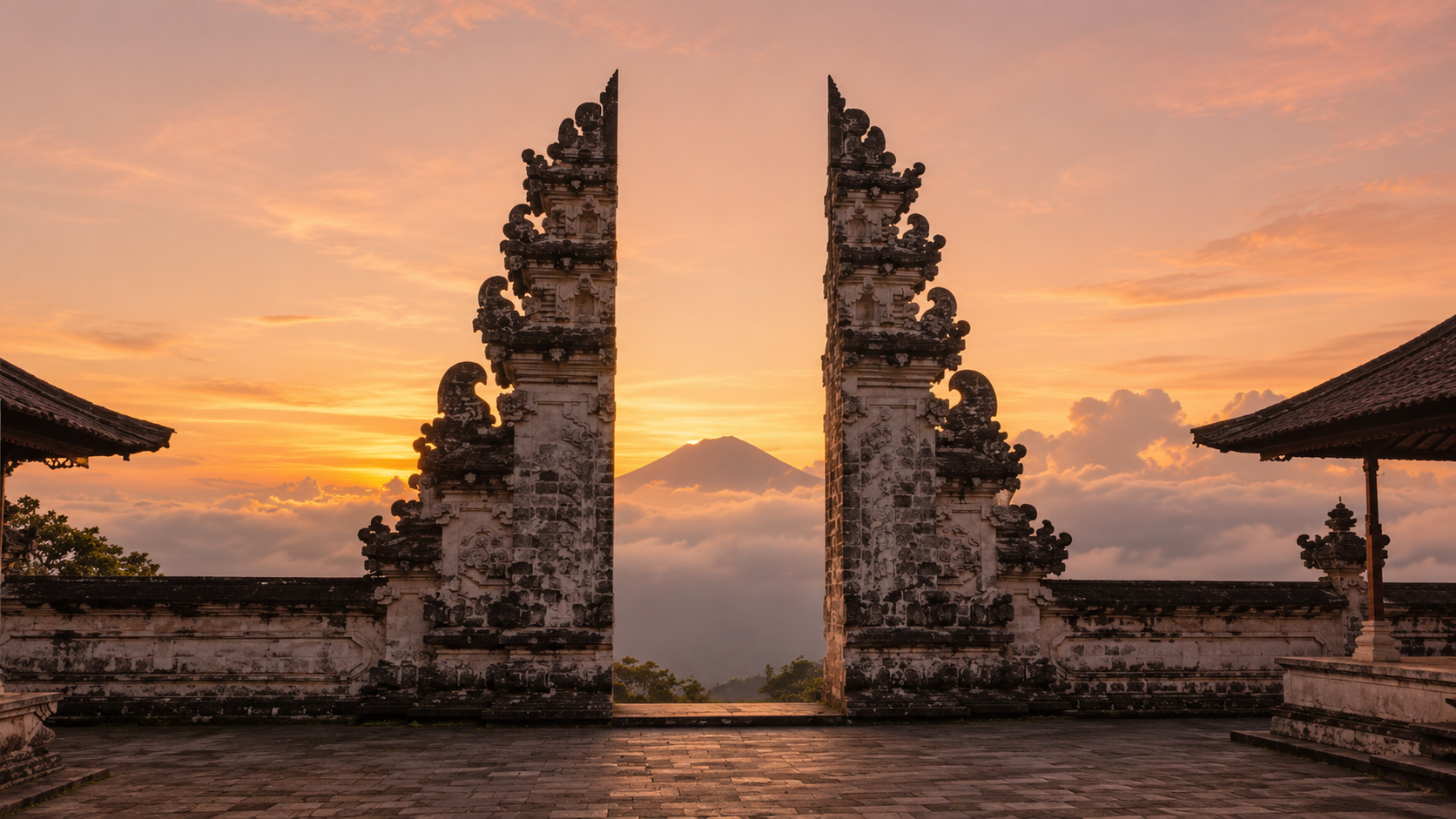
Where it is: On the slopes of Mount Lempuyang in Karangasem, East Bali, about 2-2.5 hours from Ubud.
-
Best time to visit: Arrive at sunrise or very early in the morning, when Mount Agung is clearest and the queue is shortest.
Lempuyang is home to the famous "Gates of Heaven", a split gateway that perfectly frames Mount Agung. It's one of the most Instagrammed spots in Bali, and the wait for a photo can stretch to two hours or more later in the day. Note that the mirror-like "lake" reflection seen in many photos is created by photographers holding a mirror under the phone lens.
Beyond the gateway, Lempuyang is one of Bali's oldest and most sacred temples. Fit visitors can climb roughly 1,700 steps through the forest to Pura Lempuyang Luhur at the summit, a quieter and more spiritual experience.
-
Besakih Temple (Pura Besakih)
-
Where it is: On the southwestern slopes of Mount Agung in Karangasem, East Bali, about 1-1.5 hours from Ubud.
-
Best time to visit: Morning, before clouds roll in over the volcano and before midday tour groups.
Known as the "Mother Temple of Bali", Besakih is the largest and holiest temple complex on the island. It spreads across terraced levels on the mountainside and includes more than 80 individual temples, with Pura Penataran Agung at its heart. The site survived the 1963 eruption of Mount Agung, which many Balinese see as a sign of its sacred power.
Hiring an official local guide at the entrance is worthwhile. They'll explain the complex's history and show you areas that visitors may enter.
-
Ulun Danu Beratan Temple
-
Where it is: On the shore of Lake Beratan in Bedugul, Tabanan Regency, about 1.5 hours from Ubud.
-
Best time to visit: Early morning, when the lake is calm and mist drifts over the water.
Ulun Danu Beratan appears to float on the lake, with its tiered meru shrines reflected in the water and mountains rising behind. Built in the 17th century, it is dedicated to Dewi Danu, the goddess of water, lakes and rivers, who is vital to Bali's rice-farming communities. The temple is so iconic that it appears on Indonesia's 50,000 rupiah banknote. At around 1,200 metres above sea level, Bedugul is also refreshingly cool, so bring a light jacket. Nearby, explore the Jatiluwih Rice Terraces or visit a beautiful waterfall near Bedugul.
-
Tirta Empul Temple
-
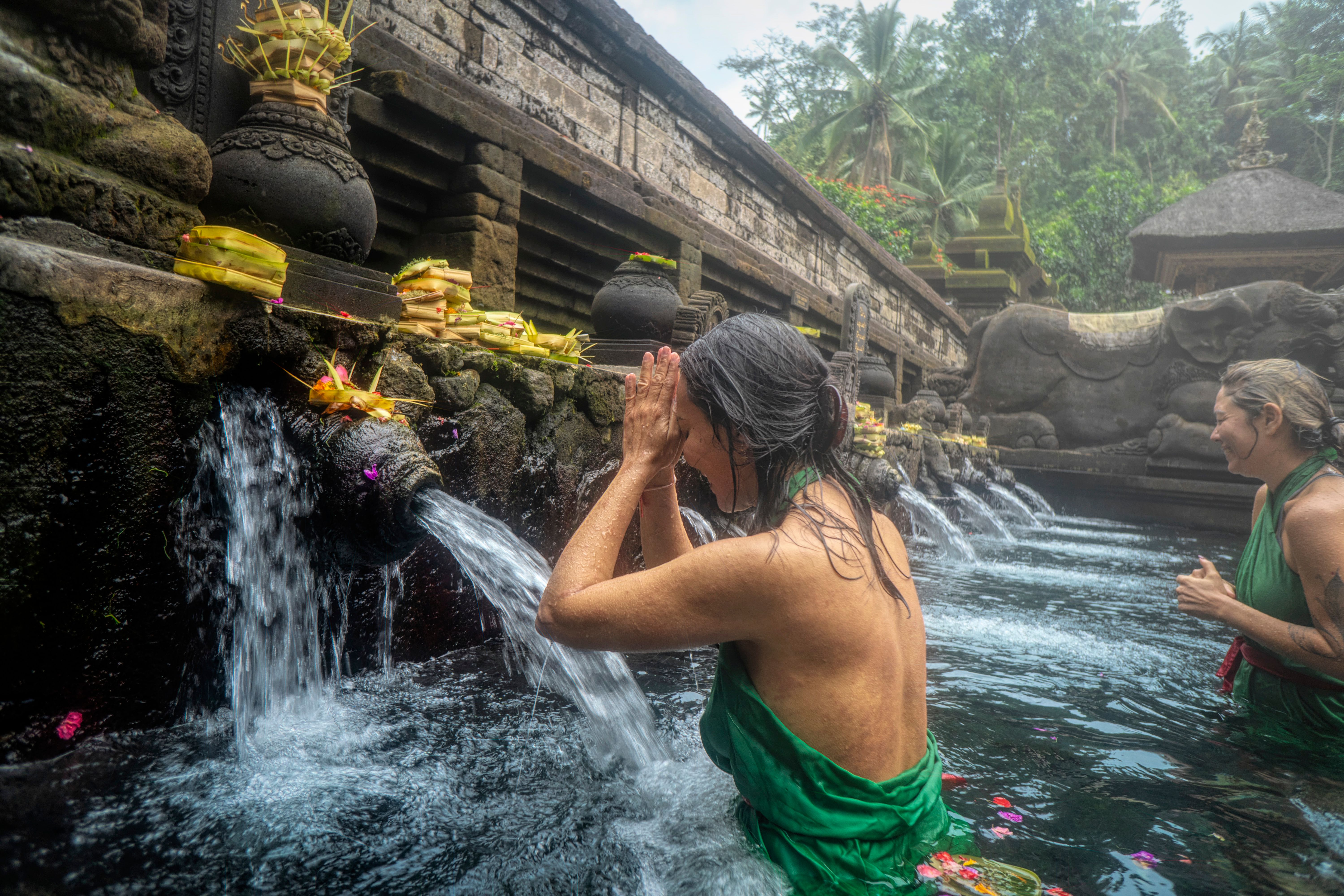
Where it is: In Tampaksiring, Gianyar Regency, about 30 minutes north of Ubud.
-
Best time to visit: As soon as it opens in the morning, before the bathing pools get crowded.
Tirta Empul, founded over a thousand years ago, is built around a sacred natural spring. Balinese Hindus come here for melukat, a purification ritual in which they move along a row of stone spouts in the bathing pool, praying and bathing under each one. Visitors are welcome to take part, wearing the green sarong provided and following the correct order of spouts. Even if you don't join in, watching the ritual is a moving glimpse of the Balinese faith.
Bali Temples at a Glance
| Temple | Area | Best time | Best for |
| Uluwatu Temple | Uluwatu, South Bali | Late afternoon and sunset | Cliff views, Kecak fire dance |
| Tanah Lot | Tabanan, West Coast | Sunset or low tide | Iconic sea temple photos |
| Lempuyang Temple | Karangasem, East Bali | Sunrise | Gates of Heaven, Mount Agung views |
| Besakih Temple | Karangasem, East Bali | Morning | Culture, history, Bali's holiest site |
| Ulun Danu Beratan | Bedugul, Central Highlands | Early morning | Lake scenery, cool climate |
| Tirta Empul | Tampaksiring, near Ubud | Opening time | Water purification ritual |
Stay near the temples: villas in Ubud and Uluwatu→
Bali Temple Etiquette
Bali's temples are active places of worship, not just tourist attractions. Following a few simple rules shows respect to the Balinese people and their faith.
Wear a Sarong and Sash
All visitors, men and women, must wear a sarong and a sash (selendang) tied around the waist. Most major temples lend or rent them at the entrance, but bringing your own is easy and more hygienic. Cover your shoulders and avoid see-through or very short clothing.
Behave Respectfully
-
Speak quietly and avoid public displays of affection.
-
Never climb shrines, walls or statues for photos.
-
Don't step on offerings (canang sari) placed on the ground.
-
Respect areas marked for worshippers only.
-
Under traditional customs, women who are menstruating are asked not to enter temple grounds.
During Ceremonies
If you come across a ceremony, you're usually welcome to watch from a respectful distance. Don't walk in front of people who are praying, never use flash, and never position yourself higher than the priest. Give way to processions on the road and wait patiently if traffic is stopped. To plan around Nyepi and Galungan, see our month-by-month guide.
Explore Bali's Temples with a Private Tour
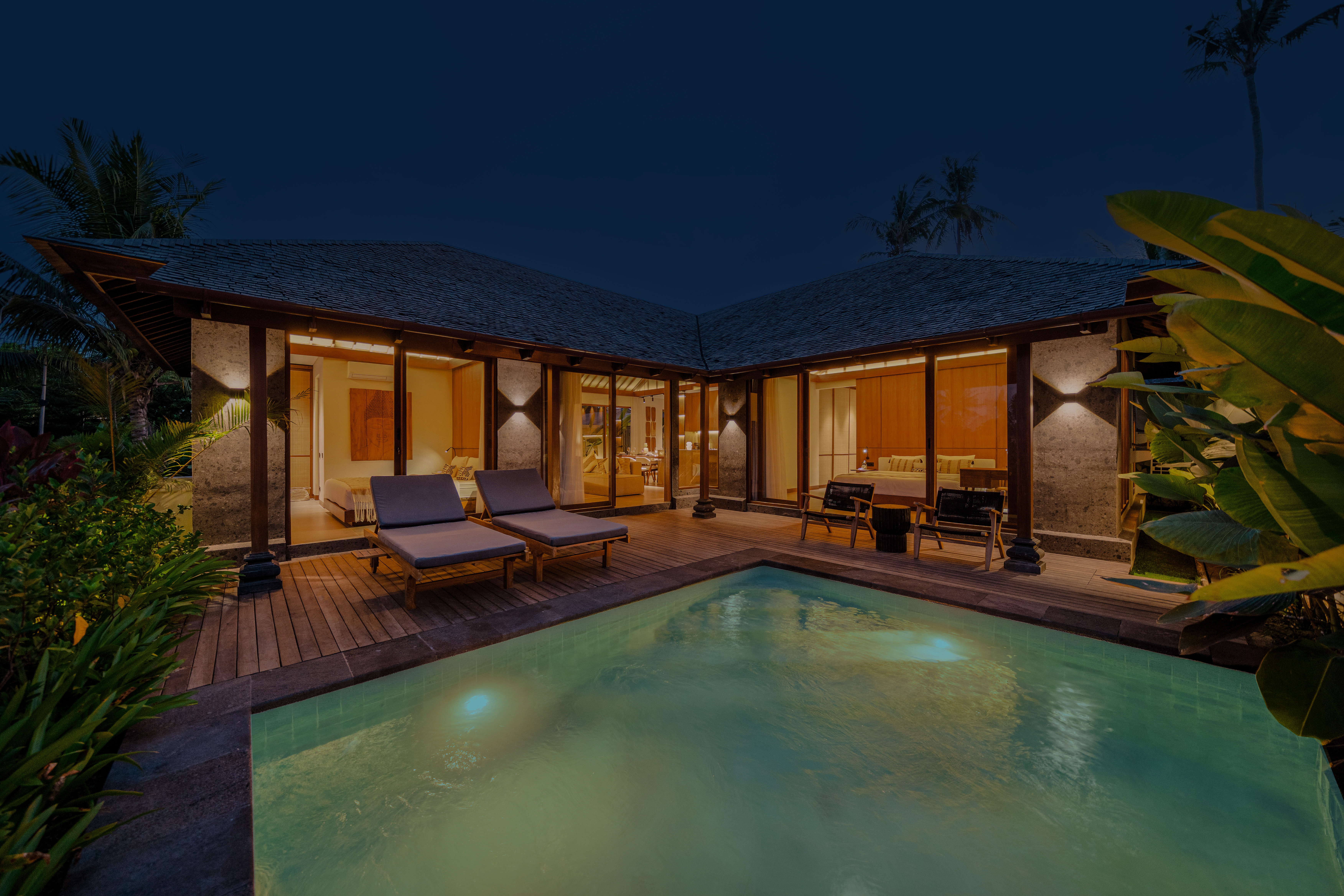
Bali's most famous temples are spread across the island, from the southern cliffs to the slopes of Mount Agung. A private tour takes the stress out of planning, with a local driver-guide who knows the best times to arrive, the stories behind each temple and the etiquette to follow. Discover Betterplace's Bali experiences and private tours, from sunset trips to Uluwatu and Tanah Lot to full-day East Bali journeys to Lempuyang and Besakih, and see the island's spiritual side at your own pace.
FAQ: Bali Temples
What is the most famous temple in Bali?
Tanah Lot and Uluwatu Temple are the most famous, thanks to their dramatic ocean settings. Besakih is the most important spiritual, like Bali's "Mother Temple".
Is Uluwatu Temple worth visiting?
Yes. Its clifftop setting is one of the most spectacular in Bali, and the Kecak fire dance at sunset is a highlight of any trip. Arrive early to get a good seat.
Is Lempuyang Temple worth the long queue?
It is if you arrive at sunrise, when the queue is shorter and Mount Agung is clearest. Later in the day, waiting for the Gates of Heaven photo can exceed two hours.
How much are the entrance fees for Bali temples?
Most major temples charge foreign visitors between IDR 60,000 and IDR 150,000 per adult. Children usually pay less, and the fee normally includes a sarong and sash. Bring cash in rupiah, as many ticket booths don't reliably accept cards.
| Temple | Adult (foreigner) | Child | Notes |
| Uluwatu Temple | IDR 60,000 | IDR 40,000 | Kecak fire dance is a separate ticket, IDR 150,000 |
| Tanah Lot | IDR 75,000 | IDR 40,000 | |
| Lempuyang Temple | IDR 125,000–150,000 | — | Includes shuttle to the temple |
| Besakih Temple | IDR 150,000 | IDR 80,000 | Includes shuttle |
| Ulun Danu Beratan | IDR 100,000 | IDR 50,000 | |
| Tirta Empul | IDR 75,000 | IDR 50,000 |
Prices as of November 2026 and subject to change. These fees are separate from the IDR 150,000 Bali tourist levy that all international visitors pay on arrival.
Do I need to wear a sarong at Bali temples?
Yes. A sarong and sash are required for everyone at all temples. Most major temples provide them at the entrance, often included in the ticket or for a small fee.
Can I visit several temples in one day?
Yes, if you group them by area. For example, combine Lempuyang and Besakih in East Bali, or Tirta Empul with Ubud's sights, and save Uluwatu or Tanah Lot for sunset.
Do I need a guide to visit Bali temples?
It isn't required at most temples, but a guide adds context and helps with etiquette. At Besakih, hiring an official guide is strongly recommended.
Find a villa in Bali → | Plan your days with Betterplace Concierge →